Energy Storage Archives - Kunini

As the world shifts towards renewable energy, homeowners are increasingly adopting solar power to reduce their dependence on traditional electricity sources. While solar panels generate electricity during daylight hours, solar battery storage systems allow you to store excess energy for later use. This means you can maximize your solar investment, reduce reliance on the grid, and ensure a more sustainable energy future.

Kunini Solar EPC, a locally based company in Thailand, specializes in solar installations and energy storage solutions tailored to residential and commercial needs. In this article, we explore the top seven benefits of solar battery storage systems and why investing in this technology can make a significant difference for your home.

1. Energy Independence

One of the biggest advantages of a solar battery storage system is achieving energy independence. By storing the excess energy produced by your solar panels, you reduce your reliance on the national grid and external energy providers. This means you are less vulnerable to energy price fluctuations and supply shortages.

In Thailand, where energy demands continue to rise, having a solar battery system ensures you have power when you need it most. Whether it’s during a storm, a grid outage, or peak demand periods, a well-installed solar battery storage system—such as those provided by Kunini Solar EPC—gives homeowners the freedom to manage their energy consumption effectively.

By producing and storing your own electricity, you gain greater control over your household energy needs. This not only enhances security but also contributes to a more self-sufficient and resilient home energy system.

2. Lower Electricity Bills

Electricity prices are continuously rising, making it essential for homeowners to find ways to cut costs. Solar battery storage systems help significantly reduce electricity bills by allowing you to use stored solar energy instead of purchasing power from the grid, especially during peak hours when electricity rates are at their highest.

In Thailand, peak electricity prices can put a strain on household budgets, but a solar battery system can offset these costs. During the day, your solar panels generate electricity, and any excess energy is stored in the battery for nighttime use. This means you rely less on grid power, leading to substantial long-term savings.

Kunini Solar EPC offers advanced solar storage solutions designed to maximize savings and optimize energy usage for homeowners. By installing a solar battery system, you can take full advantage of solar energy, reducing your reliance on expensive utility electricity and making your home more cost-efficient.

Thailand Solar panel suppliers

3. Increased Energy Efficiency

Without a solar battery, excess solar energy that isn’t immediately used gets sent back to the grid. While some utilities offer net metering, allowing you to sell this energy back, it’s often at a lower rate than what you pay for electricity. A solar battery ensures that no energy goes to waste by storing surplus power for use when needed.

This results in greater energy efficiency, as you utilize the energy you generate rather than relying on the grid. Smart energy management systems further enhance this efficiency by monitoring consumption and optimizing battery usage.

Kunini Solar EPC provides high-quality solar battery storage solutions in Thailand that integrate seamlessly with your solar system. With our expertise, we ensure that your home maximizes its energy potential, making your system more efficient and cost-effective.

4. Backup Power During Outages

Thailand experiences occasional power outages due to weather conditions, infrastructure maintenance, and increased energy demand. Having a solar battery storage system ensures that your home remains powered during blackouts, providing an uninterrupted electricity supply for essential appliances.

A reliable backup power source is especially critical for households with medical devices, refrigeration needs, and security systems. When the grid goes down, your solar battery automatically supplies stored energy, keeping your home running smoothly.

Kunini Solar EPC offers advanced battery storage solutions designed to keep Thai homes powered during emergencies. Our systems are engineered for reliability, ensuring that you never have to worry about unexpected power failures disrupting your daily life.

5. Environmental Benefits

Solar battery storage systems contribute to a more sustainable environment by maximizing the use of renewable energy and reducing dependence on fossil fuels. By storing and using more solar energy, you lower your home’s carbon footprint and help decrease greenhouse gas emissions.

In Thailand, where the government is encouraging a shift toward renewable energy, adopting solar battery storage aligns with national sustainability goals. Less reliance on grid electricity means fewer fossil fuels are burned to generate power, leading to cleaner air and a healthier environment.

By working with Kunini Solar EPC, homeowners can take an active role in environmental conservation. Our solar battery storage solutions help reduce energy waste and promote a greener, more sustainable future for Thailand.

6. Higher Property Value

Installing a solar battery storage system can significantly enhance the value of your home. Energy-efficient homes are in high demand, as buyers recognize the long-term financial and environmental benefits of solar technology.

A home equipped with solar battery storage is more attractive to potential buyers because it offers lower electricity bills, energy security, and reduced reliance on the grid. In Thailand’s real estate market, properties with renewable energy solutions stand out as modern and forward-thinking investments.

Kunini Solar EPC helps homeowners future-proof their properties by integrating state-of-the-art solar battery systems. By investing in solar storage, you not only enjoy immediate benefits but also increase your home’s resale value in an evolving energy-conscious market.

7. Government Incentives & Rebates

Many governments, including Thailand, offer financial incentives to encourage solar energy adoption. These incentives often come in the form of tax credits, rebates, and low-interest financing options, making solar battery storage systems more affordable for homeowners.

Thailand’s renewable energy policies aim to support homeowners in transitioning to solar power by offering subsidies and favorable policies. By taking advantage of these incentives, you can significantly reduce the upfront cost of installing a solar battery system.

Kunini Solar EPC stays up to date with Thailand’s solar energy policies, ensuring that our clients can benefit from available incentives. We help homeowners navigate the process of applying for rebates and making the switch to solar energy as cost-effective as possible.

Conclusion

Investing in a solar battery storage system is a smart decision for any homeowner looking to achieve energy independence, lower electricity costs, and contribute to a sustainable future. The benefits extend beyond financial savings, offering increased energy efficiency, backup power during outages, and a positive impact on the environment.

Kunini Solar EPC, a trusted local provider in Thailand, specializes in designing and installing high-quality solar battery storage solutions tailored to individual energy needs. Whether you’re looking to maximize savings, enhance home efficiency, or secure a reliable backup power source, our team is here to help.

Take control of your energy future today by exploring the possibilities of solar battery storage with Kunini Solar EPC. Contact us to learn more about how our solutions can transform your home into an energy-efficient powerhouse.

Introduction

As businesses worldwide look for ways to reduce costs, improve sustainability, and achieve energy independence, solar energy has emerged as a game-changing solution. No longer just an alternative energy source, solar power now offers innovative applications that go beyond traditional rooftop installations. From powering electric vehicle (EV) charging stations to integrating solar technology directly into buildings, businesses have more opportunities than ever to leverage solar energy.

For companies in Thailand, Kunini Solar EPC, a locally based expert in solar installations, provides customized solar solutions tailored to the specific needs of various industries. By adopting cutting-edge solar technologies, businesses can significantly lower operational expenses while demonstrating their commitment to sustainability. Here are six innovative ways businesses can harness solar energy for long-term success.


1. Solar-Powered Smart Windows & Building-Integrated Photovoltaics (BIPV)

Traditional rooftop solar panels are not the only way to generate renewable energy. Businesses can now utilize solar-powered smart windows and building-integrated photovoltaics (BIPV) to maximize energy efficiency. These technologies allow windows, facades, and even roofs to generate electricity while maintaining aesthetic appeal.

Smart solar windows use photovoltaic glass to convert sunlight into electricity while regulating indoor temperatures, reducing the need for air conditioning. BIPV technology integrates solar panels directly into a building’s structure, offering a sleek and functional alternative to traditional installations.

By adopting these innovations, businesses can achieve dual benefits—energy savings and architectural elegance. Locally based Kunini Solar EPC can help companies in Thailand explore BIPV solutions, ensuring optimal energy generation while maintaining modern aesthetics.


2. Solar-Powered Microgrids for Energy Independence

Energy security is a growing concern for businesses, particularly those operating in regions with unstable power supply or high electricity costsSolar-powered microgrids offer a reliable alternative, allowing businesses to generate and store their electricity independently from the national grid.

Microgrids are self-sustaining energy systems that integrate solar panels with battery storage. These systems ensure uninterrupted power supply, reducing downtime caused by grid failures or peak demand surges. Additionally, businesses with excess solar energy can share or sell power within a local network, further enhancing financial returns.

With the help of Kunini Solar EPC, Thai businesses can develop customized microgrid solutions to meet their specific energy needs. Whether for manufacturing facilities, hospitals, or commercial hubs, microgrids provide a cost-effective and resilient energy strategy.


3. Net Metering: Selling Excess Solar Energy Back to the Grid

Many businesses install solar panels to reduce electricity costs, but not all realize they can earn revenue by selling excess energy back to the grid. This process, known as net metering, allows companies to receive energy credits when their solar systems produce more electricity than needed.

With a net metering system, businesses can offset their energy bills and maximize their return on investment. This setup is particularly beneficial for companies with large rooftop or ground-mounted solar arrays, as excess energy generated during peak sunlight hours can be credited against nighttime consumption.

Kunini Solar EPC, as a leader in Thailand’s solar industry, helps businesses set up net metering systems to take full advantage of available incentives and maximize financial savings.


4. Solar Thermal Systems for Heating & Cooling

Beyond generating electricity, solar energy can also be used for heating and cooling applicationsSolar thermal systems harness the sun’s heat to provide hot water, space heating, and even air conditioning through absorption cooling technology.

For businesses in the hospitality, manufacturing, and healthcare sectors, solar thermal solutions can significantly reduce energy costs associated with heating water or maintaining indoor climate control. Solar-powered water heating is particularly beneficial for hotels, resorts, and hospitals, where hot water demand is constant.

By working with Kunini Solar EPC, businesses can integrate solar thermal technology into their facilities, reducing reliance on traditional heating and cooling systems while lowering their carbon footprint.


5. Agrivoltaics & Solar Farming for Business Sustainability

For businesses in the agriculture sector, solar energy presents a unique opportunity through agrivoltaics—the practice of combining solar energy production with farming. Solar panels can be installed over crops or livestock areas, allowing farms to generate renewable energy without sacrificing land for agricultural use.

Agrivoltaics provides several benefits, including shade for crops, reducing water evaporation, and improving land-use efficiency. Additionally, livestock farmers can use solar-powered water pumps and fencing, reducing operational costs.

Kunini Solar EPC assists agribusinesses in Thailand by designing agrivoltaic systems that optimize both energy production and agricultural productivity. By adopting solar farming, businesses can reduce costs while enhancing sustainability.


6. Solar Energy for Factories & Industrial Operations

Factories and industrial facilities are some of the largest consumers of electricity. By integrating solar energy, manufacturers can significantly cut operational costs and enhance energy efficiency. Large rooftop spaces in factories are ideal for installing solar panels, allowing for maximum energy capture.

Factories that run high-energy-consuming processes—such as refrigeration, assembly lines, or metal fabrication—benefit immensely from solar power. In addition to cost savings, solar energy reduces reliance on fossil fuels, helping industries meet environmental regulations and corporate sustainability goals.

Kunini Solar EPC specializes in large-scale factory solar installations in Thailand, offering end-to-end solutions that maximize energy savings while ensuring long-term reliability.


Conclusion

The transition to solar energy is no longer just an environmental initiative—it is a strategic business decision that offers significant cost savings, energy security, and brand reputation enhancement. From solar-powered smart windows to net metering and factory solar, businesses have multiple ways to integrate solar energy into their operations.

For companies in Thailand looking to make the switch, Kunini Solar EPC provides locally tailored solar solutionsthat help businesses achieve their energy goals. With expertise in solar panel installations, microgrid development, and agrivoltaic systems, Kunini Solar EPC ensures that businesses not only save on electricity but also contribute to a sustainable future.

Ready to take advantage of solar energy for your business? Contact Kunini Solar EPC today and discover how your company can benefit from the power of the sun.

Name of client: Ove Bratland

Location: Pattaya

Size of project: 10kW On Grid System   

Equipment used: We used

  • Huawei 10kW Three Phase Hybrid Inverter, on grid
  • We installed 17 Jinko 580Wp Mono Solar Panels, N-Type  (9.8kWp) + Sun for Sun Solar Mounting structure for the Metal Sheet Roof + Concrete Roof.. 
  • As with all Solar Rooftops we install DC + AC Surge Protection and an RCBO for complete safety. The solar PV array is grounded, and we install a dedicated DC grounding system. 
  • The customer has enough Solar Power to cover all his daytime needs. He is looking to apply for Solar FIT at a later date. 
  • The customer can use the Huawei Fusion Solar App or web portal to monitor the system.

Challenges: The Roof was a bit of a challenge due to the angle and age. We split the system over two roofs

Installation Date: 15th October 2024

Name of client: Les Oliver

Location: Pattaya

Size of project: 12kW On Grid 

Equipment used: We used

  • Huawei 12kW Three Phase Inverter + Smart Power Sensor + WLAN Dongle. This inverter is ‘battery ready’ so the customer can install batteries later if they need them. 
  • We installed 22 Jinko 580Wp Mono Solar Panels, N-Type  (12.7kWp) +
  • Lock Solar Mounting structure for the C-Pac Roof. 
  • As with all Solar Rooftops we install DC + AC Surge Protection and an RCBO for complete safety. The solar PV array is grounded, and we install a dedicated DC grounding system. 
  • The customer can use the Fusion Solar App or web portal to monitor the system. 

Challenges: The PV Array was quite far from the house so we had to run shielded comms cable from the Solar Inverter to the main incoming connection point. The Smart Energy Meter is installed at the main house

Interesting attributes : Easy to install Huawei Systems everything works out of the box ☺

Installation Date: 11th Sept 2024

Name of client: Paul Schmidt

Location: Pattaya

Size of project: 20kW Hybrid System 

Equipment used: We used

  • 2 X Alpha ESS 10kW Three Phase Hybrid Inverters 20kW System,
  • 6 Alpha Smile Batts (49.2kWh) + Smart Power Sensor and Wi-Fi /LAN.
  • For this system we had to set up 2 sets of backup loads and 2 ATS panels.
  • We installed 40 Jinko 580Wp Mono Solar Panels, N-Type (23.2kWp) +
  • Lock Solar Mounting structure for the C-Pac Roof.
  • As with all Solar Rooftops we install DC + AC Surge Protection and an RCBO for complete safety. The solar PV array is grounded, and we install a dedicated DC grounding system. The customer has enough Solar Power to cover all his daytime needs, and the batteries are enough to get him thru the night.
  • The customer can use the Alpha App or web portal to monitor the system.

Challenges: Setting up the backup system is always a challenge as the electrical system
is not installed to any standard and lots of circuits are inter-connected.

Interesting attributes : First 20kW Alpha System in Pattaya – on third parallel system in Thailand
at the time

Installation Date: 11 th July 2024

Introduction

As the world pivots towards renewable energy solutions, the importance of efficient and reliable energy storage systems has never been greater. For homeowners, this shift opens up opportunities to harness and store energy more effectively, reducing reliance on traditional power grids. Among the most promising technologies for residential energy storage are lithium batteries. In this blog, we’ll explore the benefits of lithium batteries for residential use, their applications, and why Kunini Solar EPC, a locally based company in Thailand, is your best partner in making this energy transition.

Understanding Lithium Batteries

What Are Lithium Batteries?

Lithium batteries, or lithium-ion batteries, are rechargeable energy storage devices that have gained popularity due to their high energy density and long lifespan. Unlike traditional lead-acid batteries, lithium batteries use lithium compounds to achieve higher efficiency and energy storage capacity. This makes them an excellent choice for applications that require a lightweight and high-performance battery.

Lithium-ion technology stands out due to its ability to store more energy per unit of weight and volume compared to other battery types. This efficiency translates into longer usage times and shorter charging cycles, which are critical for residential energy storage systems. By choosing lithium batteries, homeowners can ensure a more stable and reliable power supply.

History and Development

The development of lithium batteries dates back to the 1970s, with significant advancements occurring in the 1990s and 2000s. Initially developed for portable electronics, the technology has evolved to meet the demands of larger applications, including electric vehicles and residential energy storage systems. Companies like Kunini Solar EPC have been at the forefront of adopting and implementing these advancements, providing cutting-edge energy solutions to homeowners in Thailand.

Benefits of Lithium Batteries for Homeowners

High Energy Density

One of the primary advantages of lithium batteries is their high energy density. This means they can store a large amount of energy in a relatively small and lightweight package. For residential customers, this is particularly beneficial as it allows for more efficient use of space and easier integration into existing home setups.

The high energy density of lithium batteries ensures that homeowners can store more energy without requiring extensive space. This is especially important in urban settings where space can be limited. Kunini Solar EPC offers a range of lithium battery solutions designed to fit seamlessly into various residential environments, ensuring optimal use of available space.

Long Lifespan

Lithium batteries are known for their long lifespan, often lasting up to 10 years or more with proper maintenance. This longevity is a significant advantage over other types of batteries, such as lead-acid batteries, which typically require replacement every few years. The extended lifespan of lithium batteries translates to cost savings over time, as homeowners do not need to replace their batteries as frequently.

Kunini Solar EPC provides high-quality lithium batteries that are designed to endure the rigors of regular use. By choosing Kunini Solar EPC, homeowners in Thailand can benefit from reliable energy storage solutions that stand the test of time, ensuring peace of mind and continuous power supply.

Efficiency and Performance

Lithium batteries offer superior charge and discharge efficiency, meaning they can store and release energy with minimal losses. This efficiency is crucial for maximizing the use of renewable energy sources, such as solar power. With higher efficiency rates, homeowners can store more of the energy they generate and use it more effectively.

Performance is another key benefit. Lithium batteries perform well in various weather conditions, maintaining their efficiency and reliability. This makes them ideal for the diverse climate conditions found in Thailand. Kunini Solar EPC specializes in providing lithium battery solutions that are tailored to the local environment, ensuring optimal performance year-round.

Applications in Residential Settings

Home Energy Storage

One of the most common applications of lithium batteries in residential settings is home energy storage. These systems allow homeowners to store excess energy generated from renewable sources, such as solar panels, for use during periods when energy production is low or demand is high. This not only increases energy independence but also provides a reliable backup during power outages.

Integrating lithium batteries with solar panels is a popular choice among homeowners looking to maximize their renewable energy use. Kunini Solar EPC offers comprehensive solutions that combine high-quality solar panels with advanced lithium battery storage systems, providing a seamless and efficient energy storage solution for homes across Thailand.

Off-Grid Living

For those living in remote areas or seeking to achieve complete energy independence, off-grid living is an attractive option. Lithium batteries are particularly well-suited for off-grid applications due to their high energy density and long lifespan. They provide a reliable source of power in locations where access to the traditional power grid is limited or unavailable.

Kunini Solar EPC has extensive experience in designing and implementing off-grid energy solutions tailored to the unique needs of homeowners in Thailand. With their expertise, homeowners can enjoy the benefits of a self-sufficient energy system that provides consistent power, regardless of location.

Smart Homes and Energy Management

The integration of lithium batteries with smart home systems is another exciting application. Smart home technology allows for the monitoring and management of energy use, optimizing consumption, and ensuring efficiency. Lithium batteries can store energy during off-peak times and release it during peak demand, reducing energy costs and enhancing overall efficiency.

Kunini Solar EPC provides state-of-the-art smart home integration services, ensuring that homeowners can fully leverage the capabilities of their lithium battery systems. By partnering with Kunini Solar EPC, residents in Thailand can create a smart, efficient, and sustainable home energy system.

Installation and Maintenance

Installation Process

The installation of lithium battery systems requires careful planning and execution. It involves assessing the home’s energy needs, selecting the appropriate battery size, and ensuring compatibility with existing energy systems. Professional installation is recommended to ensure safety and optimal performance.

Kunini Solar EPC offers professional installation services, ensuring that each system is tailored to the specific needs of the homeowner. Their team of experts provides comprehensive support, from initial assessment to final installation, ensuring a smooth and efficient process.

Safety Considerations

Safety is a critical aspect of using lithium batteries. These batteries are designed with numerous safety features, including overcharge and discharge protection, temperature control, and short-circuit prevention. Proper handling and storage are also essential to prevent accidents and ensure longevity.

Kunini Solar EPC prioritizes safety in all their installations. They provide detailed guidance on the safe use and maintenance of lithium battery systems, ensuring that homeowners can enjoy the benefits of their energy storage solution with confidence.

Maintenance Tips

While lithium batteries require less maintenance compared to other types, regular checks are still necessary to ensure optimal performance. Routine maintenance tasks include monitoring the battery’s charge levels, inspecting connections, and ensuring proper ventilation.

Kunini Solar EPC offers maintenance services and support, helping homeowners keep their lithium battery systems in top condition. Their comprehensive maintenance plans ensure that any potential issues are addressed promptly, maximizing the lifespan and efficiency of the system.

Cost Considerations

Upfront Costs

The initial investment for lithium battery systems can be higher compared to other types of batteries. However, the benefits of longer lifespan, higher efficiency, and greater performance often justify the upfront cost. It is important for homeowners to consider the long-term savings and benefits when evaluating the cost of a lithium battery system.

Kunini Solar EPC provides transparent pricing and financing advice, helping homeowners in Thailand make informed decisions about their energy investments. Their team can guide you through the cost-benefit analysis, ensuring that you understand the value of your investment.

Long-Term Savings

While the initial cost of lithium batteries may be higher, the long-term savings can be substantial. Lithium batteries require fewer replacements and less maintenance, resulting in lower overall costs. Additionally, the efficiency and performance of lithium batteries can lead to significant energy savings over time.

Government incentives and rebates can further reduce the cost of installing lithium battery systems. Kunini Solar EPC stays up-to-date with the latest incentives and offers guidance on how homeowners can take advantage of these opportunities, ensuring maximum savings.

Environmental Impact

Sustainability

Lithium batteries are a more sustainable option compared to traditional energy storage solutions. They produce fewer greenhouse gas emissions and have a lower environmental impact throughout their lifecycle. By choosing lithium batteries, homeowners can contribute to a more sustainable future.

Kunini Solar EPC is committed to providing environmentally friendly energy solutions. Their lithium battery systems are designed to minimize environmental impact, helping homeowners reduce their carbon footprint and promote sustainability.

Recycling and Disposal

Proper recycling and disposal of lithium batteries are essential to prevent environmental harm. Many components of lithium batteries can be recycled, reducing the need for raw materials and minimizing waste. Homeowners should ensure that their batteries are disposed of responsibly at the end of their lifecycle.

Kunini Solar EPC provides guidance on the proper disposal and recycling of lithium batteries. They partner with reputable recycling facilities to ensure that used batteries are handled in an environmentally responsible manner.

Future Trends and Innovations

Technological Advances

The field of lithium battery technology is continuously evolving, with ongoing research and development leading to new advancements. Improvements in energy density, charging speed, and overall performance are expected to make lithium batteries even more efficient and cost-effective in the future.

Kunini Solar EPC stays at the forefront of these technological advances, incorporating the latest innovations into their energy solutions. By partnering with Kunini Solar EPC, homeowners can benefit from the most advanced and efficient lithium battery systems available.

Market Trends

The residential energy storage market is growing rapidly, driven by the increasing adoption of renewable energy sources and the need for reliable energy storage solutions. This growth is expected to continue, with lithium batteries playing a central role in the market’s expansion.

Kunini Solar EPC is well-positioned to meet the growing demand for residential energy storage solutions in Thailand. Their expertise and commitment to quality ensure that homeowners receive the best possible service and support as they transition to more sustainable energy solutions.

Conclusion

Lithium batteries offer numerous benefits for residential customers, from high energy density and long lifespan to efficiency and performance. Their applications in home energy storage, off-grid living, and smart homes make them a versatile and valuable addition to any household. Kunini Solar EPC, a locally based company in Thailand, provides top-quality lithium battery solutions, ensuring that homeowners can enjoy the full benefits of this advanced technology.

Whether you are looking to reduce your energy costs, increase your energy independence, or contribute to a more sustainable future, Kunini Solar EPC has the expertise and experience to help you achieve your goals. Contact Kunini Solar EPC today to learn more about their comprehensive range of lithium battery solutions and how they can help you unlock the power of energy storage for your home.

Introduction

In the ever-evolving world of solar energy, selecting the right components for your solar roof system is crucial. Among these, the solar inverter plays a pivotal role in converting DC power generated by solar panels into usable AC power for your home or business. In this comprehensive guide, we will explore the different types of solar inverters, their features, and essential considerations to help you make informed decisions. Drawing on our local expertise, Kunini Solar EPC, based in Thailand, will guide you through the intricacies of choosing the right solar inverter for your specific needs.

The Role of Solar Inverters

Atess

Before delving into the types and features of solar inverters, it’s essential to understand their fundamental role in a solar roof system. Inverters are responsible for converting the direct current (DC) electricity generated by solar panels into alternating current (AC), which is the form of electricity used in homes and businesses. Choosing the right inverter is critical for maximizing the efficiency and performance of your solar roof.

Types of Solar Inverters

  1. String Inverters: String inverters are a common choice for solar roof systems. They operate by connecting multiple solar panels in a series or “string.” While cost-effective and relatively simple, string inverters can be affected by shading issues on one panel, impacting the efficiency of the entire string.
  2. Microinverters: Microinverters are installed on each individual solar panel, offering a more decentralized approach to power conversion. This minimizes the impact of shading issues and allows for better monitoring of individual panel performance. Kunini Solar EPC recommends microinverters for installations with varying shading conditions.
  3. Power Optimizers: Power optimizers work in conjunction with a central inverter but provide additional benefits. They optimize the power output of each solar panel independently, mitigating the impact of shading and enhancing system performance. Power optimizers are an excellent choice for systems with partial shading concerns.

Considerations for Inverter Selection

When selecting a solar inverter for your roof system, several key considerations should guide your decision-making process:

  1. System Size and Design: Ensure that the inverter’s capacity matches the size of your solar system. Kunini Solar EPC, with its local expertise in Thailand, can assist in designing a system that optimally utilizes the chosen inverter.
  2. Efficiency Ratings: Evaluate the efficiency ratings of different inverters. Higher efficiency means more electricity production from your solar panels. Kunini Solar EPC recommends investing in an inverter with a high efficiency rating for maximum energy yield.
  3. Durability and Reliability: Considering the durability and reliability of your inverter is crucial for long-term performance. Kunini Solar EPC can guide you in selecting a reliable inverter model suitable for the local climate in Thailand.

Monitoring and Communication Features

Investing in an inverter with robust monitoring and communication features is essential for real-time data on your solar system’s performance. Kunini Solar EPC can introduce you to advanced monitoring tools that provide valuable insights into energy production, allowing you to address any issues promptly.

Inverter Compatibility with Battery Storage

As the trend towards solar-plus-storage systems grows, it’s wise to choose an inverter that is compatible with battery storage. Kunini Solar EPC can advise on selecting an inverter that supports future expansion with battery systems, providing a pathway to increased energy independence.

Cost Considerations

While cost is a significant factor in any solar project, it’s essential to consider the long-term implications. Kunini Solar EPC recommends evaluating the overall return on investment, factoring in not only the initial purchase costs but also maintenance and efficiency gains over time.

Popular Brands and Models

Navigating the myriad of solar inverter options can be overwhelming. Kunini Solar EPC highlights reputable brands and specific models known for their performance and reliability. Considering factors such as warranty, track record, and local support is crucial when making your selection.

Installation and Maintenance Requirements

Understanding the installation and maintenance requirements of different inverter types is essential for a seamless solar roof system. Kunini Solar EPC emphasizes the importance of professional installation to ensure optimal inverter performance and longevity.

Conclusion

Choosing the right solar inverter for your solar roof is a decision that impacts the efficiency, longevity, and overall success of your renewable energy investment. Kunini Solar EPC, as a locally based company in Thailand, encourages you to make informed decisions. By considering the types, features, and local expertise available, you can confidently select an inverter that aligns with your unique solar energy needs.

Additional Resources

For further reading and inquiries, Kunini Solar EPC provides local expertise and support on your journey towards sustainable energy solutions in Thailand. Contact us today for personalized guidance and assistance in choosing the right solar inverter for your solar roof project.

Our First Huawei LUNA Series Battery Install…

We have been installing Huawei solar inverters for some time and are really impressed. Our teams love installing them, they work great and look awesome.

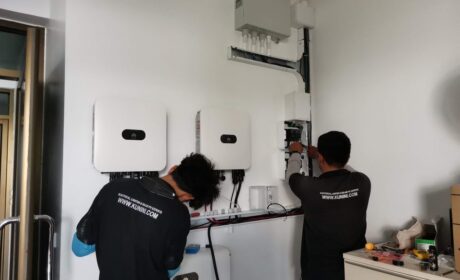
This week we completed our first Huawei LUNA battery install in Pattaya. This was a 10kWh configuration ( 5kWh +5kWh) with a controller. Max size per stack is 15kWh. For the Huawei LUNA series you need to use their Battery Back-Up Box, this is essentially an ATS to switch between utility power and battery power. When installing any Solar Hybrid system you will need to separate the loads and add critical loads to a new consumer unit. The output for this system is a 5kW single phase so you need to ensure that your critical/backup loads do not exceed this or you will overload the inverter and it will shut down. The Huawei Energy Storage System works differently from other Hybrid Systems that we have installed. There is no separate output cable that connects to your backup box, that is why you need Huawei’s Battery Back-Up Box – here you have Utility (PEA, MEA) as the primary, the Huawei Inverter as the secondary and the backup loads/critical loads.  The best way to use this system is as an off-grid system; this takes Solar PV first, Battery second and the Grid as the backup. 

The installation was fairly straightforward, the mounting kit and all components were in the package so just plug and play. Commissioning was a bit tricky as it was our first system but not difficult, the next installs will be easy. If you have just one Inverter and Battery then the setup is easy.

For this project, we installed two Huawei SUN2000 5kTL-L1 inverters, one connected to the battery and one AC coupled. This allows for 10kW of Solar PV for daytime loads and battery charging. We install a total of 30 LONGi 455Wp (mono half cut) Solar Panels, 15 per system.

The system can be monitored through the Huawei Fusion Solar application.

Finally, a solution for your backup power needs. The Alpha SMILE B3 Energy Solution can be used with an existing Solar PV system or can be used as a stand-alone critical power backup solution. The SMILEB3 is an AC coupled all-in-one battery energy storage system (BESS) that outputs 3000W of power. The integrated LiFePO. 4 battery is 2.9kWh, (2.8kWh usable) – which is expandable to 17.2kWh giving you plenty of power to manage your critical loads.

The SMILE-B3 can control the bi-directional flow of electric power, work under auto/manual & time-of-use (TOU) modes, charge/discharge the battery as per customer’s setting. All setting can be controlled through the Alpha ESS App. It also helps to achieve the optimal usage of renewable energy if you have an existing Solar PV System installed.

Frustrated with your Grid Tied System?

Do you have an existing grid-connected Solar PV system installed? Does it frustrate you when the power goes out and you’re left in the dark? The Alpha B3 solves this issue with a built-in lithium iron phosphate battery (LiFePO. 4 ) and the quick change over UPS mode. Never be in the dark again… Each system has its place and technology will forever evolve, adding on this system to take care of your backup power needs and charge it from your Solar PV system during the day.

Energy Storage, a few things to consider…

I have a Solar PV System installed, is it possible to add batteries to power my home?

The quick and simple answer is yes, but wait and read on before you rush out and buy some batteries, you don’t want to be disappointed. Do your homework and access your needs before you make the leap.

The first thing to consider is cost, at the time of writing this the cost for battery storage in Thailand is around Bt.15-18,000 per kW. So for a 10kWh Lithium battery that’s going to cost you Bt. 150,000 – Bt. 180,000 (pls 7% vat). On top of that, you are most likely going to need a controller and some other equipment and your Solar Inverter will need to be a Hybrid type and compatible with the batteries. That’s a lot to consider.

The second thing that you need to know is about connected loads, I will get to that in a minute. First, know that you can get a whole-house Solar Hybrid System but that is going to be two things; 1. Very Expensive 2. Very Big (in terms of space required for the batteries). So in this post, we will discuss the standard run of the mill home Solar Hybrid PV System. These systems are typically 5 or 10kW systems, which means that you have an output of 5 or 10kW. There are 30Kw Solar Hybrid Inverters on the market but these are mainly for Commercial Systems or very large residences. That’s where understanding loads come into play. Let’s look at a sample load set up for a standard three-bedroom house;

Sample Loads

  • Air Condition units (2), 12000 BTU 1700W
  • Swimming pool pump, 1500W
  • Water pump, 400W
  • Water heater, 6000W
  • Oven, 3000W
  • General power sockets, fan, router, charger etc.. 1000W
  • General lighting, all LEDs, 1500W
  • Computer, TV, refridgerator 1500W
  • Total Power Requirement 18,300W

Based on the above sample loads you can see that you would need a 20Kw Solar Hybrid Inverter to manage these loads. I know that not all the loads are on at the same time but we are looking at a theoretical maximum to give you an idea of what’s possible and what’s not. If you installed a 20kWh battery to the system then you would only get an hour of backup power. To cover a complete night, say 12 hours you would need 240Kwh to do that!

Critical Loads

The easiest way to add batteries to your system is to consider your critical loads. What loads are critical to you and your family should the power go out for an extended period of time. Or, if you are away what do you need to keep power to? Typically we suggest; lighting (low wattage LEDs), refrigeration, power for internet, phone chargers, fans etc., a house water pump and maybe one small Air Condition unit. Kunini can help with you load selection and separation into critical load panel Kunini Electrical Systems

Let’s look at a critical load example.

Critical Loads

  • Lighting 1000W
  • Refridgerator 400W
  • House water pump 400W
  • General power 1000W

These loads, if all turned on would be around 2800W. If you had a 5kW Solar Hybrid Inverter and a 10kWh battery you would have around 4 hours of backup power. That’s more doable when you take a step back to consider what’s critical and what’s not.

Things to Consider before making a purchase

Consider why you want to have a backup power supply, what are the main drivers? Never wanting to be left in the dark, need to be online for work and cannot have any downtime, have some critical systems that need constant power, these plus many others are possible reasons why. What size system do you need? What is the total sum (watts) of all your critical loads? Make sure that the Solar Hybrid Inverter has enough power to support these loads. Time, how long to you need to have backup power? Typically three to four hours. So if your load is 5kW and you need four hours you will need 20kWh of batteries. Take a look at our other Hybrid Blog posts