
DC System Size
94.59 kWp

AC Inverter Output
50 kW

Solar Panels
146 modules (mixed)

Inverter
1 × Solis S6-EH3P50K-H

Panel Types
LONGi 540W + Trina Solar 715W

Battery Storage
Solis FlexCore-ID 221 kWh

Battery Chemistry
LiFePO4 (11 packs in series)

Battery Voltage
704 V DC

Roof Type
Metal sheet
(3 sections)

Equipment Room
Purpose-built, dedicated

Est. Monthly Generation
~10,000 kWh

Est. Monthly Saving
~THB 50,000

Location
Pattaya, Chon Buri

Completion
September 2026

Contract Type
EPC / Direct Purchase

Export Control
Zero Export
(CT + inverter control)
Project Overview
This project is a large-scale residential solar and battery storage system installed at a private villa in the Huai Yai area of Pattaya, Chon Buri. The property is served by a 22kV three-phase supply via a 160kVA oil-immersed transformer — characteristic of larger villa estates in the Bang Lamung district — and carries a correspondingly significant electricity load across the full site.
The villa owner approached Kunini with two clear priorities: energy security and long-term cost savings. With electricity costs rising and grid reliability a concern for a high-value residential property, the objective was to design a system capable of powering all site loads — independently of the grid when necessary — while significantly reducing the monthly electricity bill.
The result is a 94.59 kWp DC solar array paired with 221 kWh of Solis FlexCore-ID LiFePO4 battery storage, managed by a single Solis 50kW hybrid inverter. The system is connected directly to the site’s Main Distribution Board (MDB), meaning every load on the property is served by the solar and storage system as the primary source of power.
The Challenge
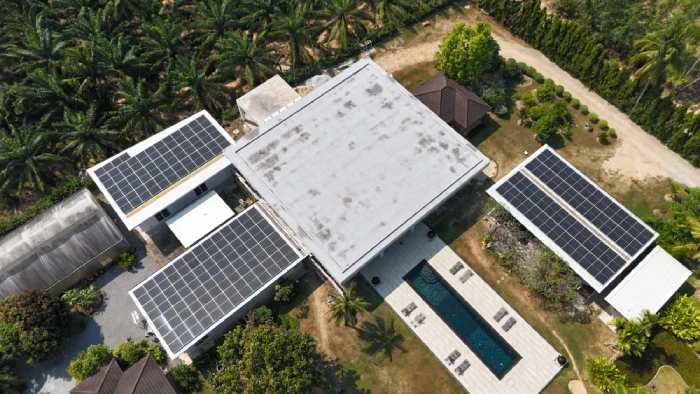
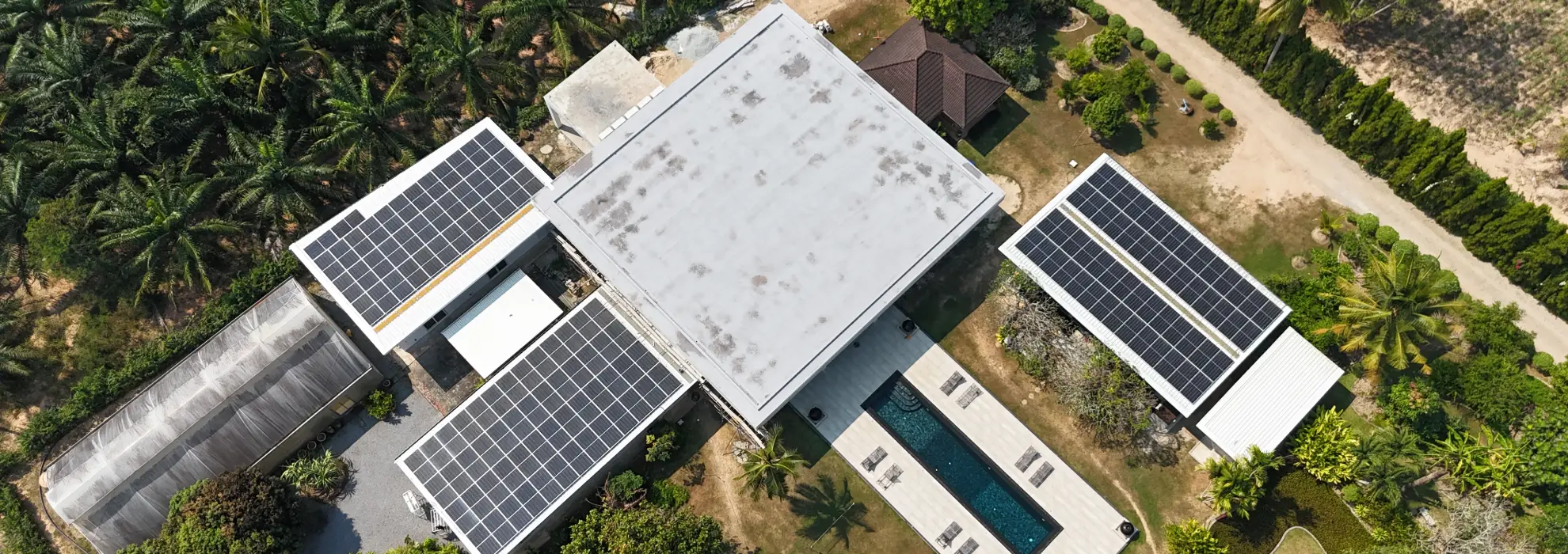
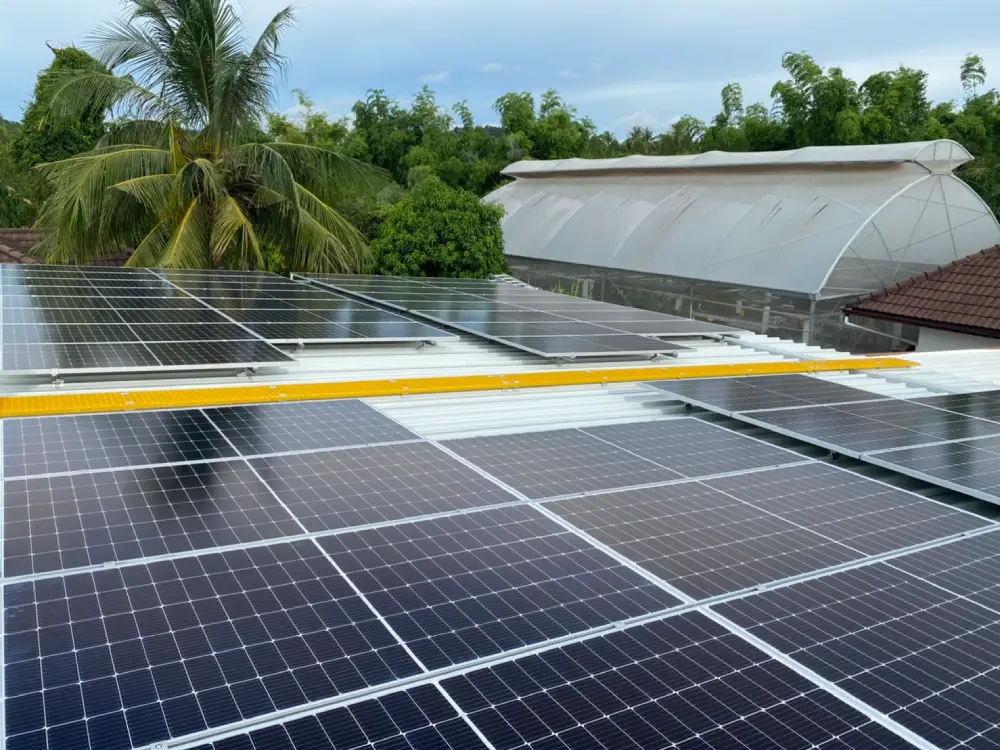
The villa’s solar resource is distributed across three separate metal sheet roof sections located at different points around the property — each with its own orientation, pitch, and available area. Designing a single coherent PV array from three physically separate rooftops required careful string engineering to ensure each section contributes optimally and that no one string drags down the performance of others.
The mix of available roof sections also dictated the use of two different panel models to make best use of available space: LONGi LR5-72HPH 540Wp modules on the smaller roof areas, and larger Trina Solar TSM-NEG21C.20 715Wp panels on the sections with greater capacity. Eight strings in total — three of the 540Wp modules and five of the 715Wp — feed into the inverter’s four independent MPPT inputs.
The integration of 221 kWh of high-voltage battery storage — 11 FlexCore-ID battery packs in series at 704V DC — presented its own installation requirements. A system of this scale needs dedicated space, adequate structural support, thermal management, and safe, accessible cabling routes. The villa owner also wanted a system that would be straightforward to service over its lifetime, not tucked into an ad-hoc installation.
The Kunini Solution
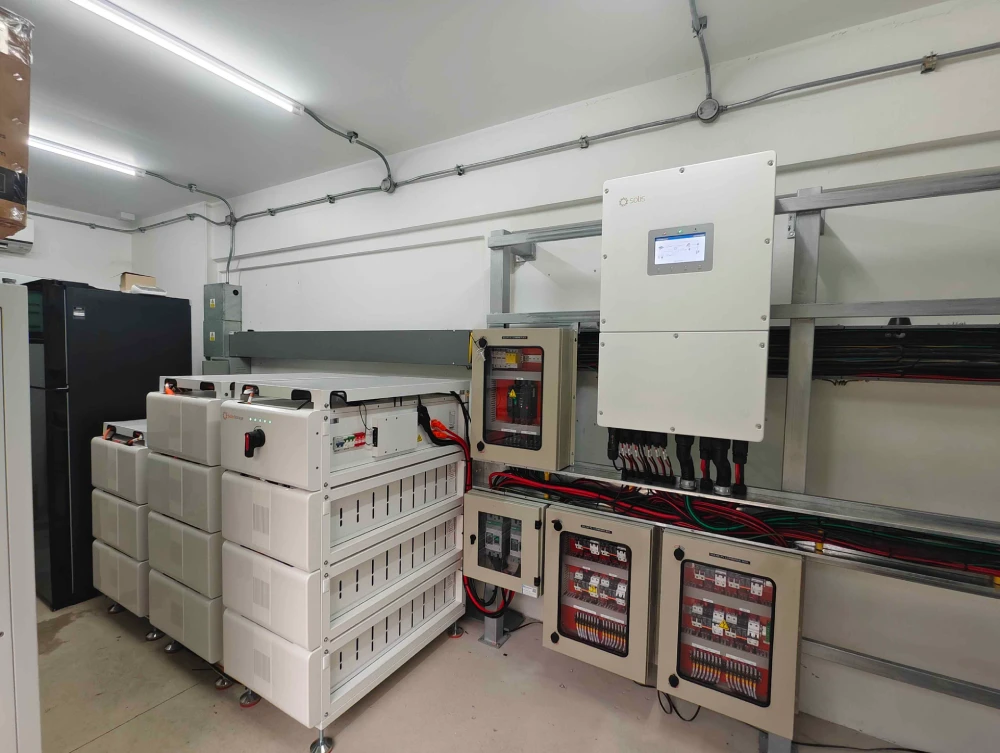
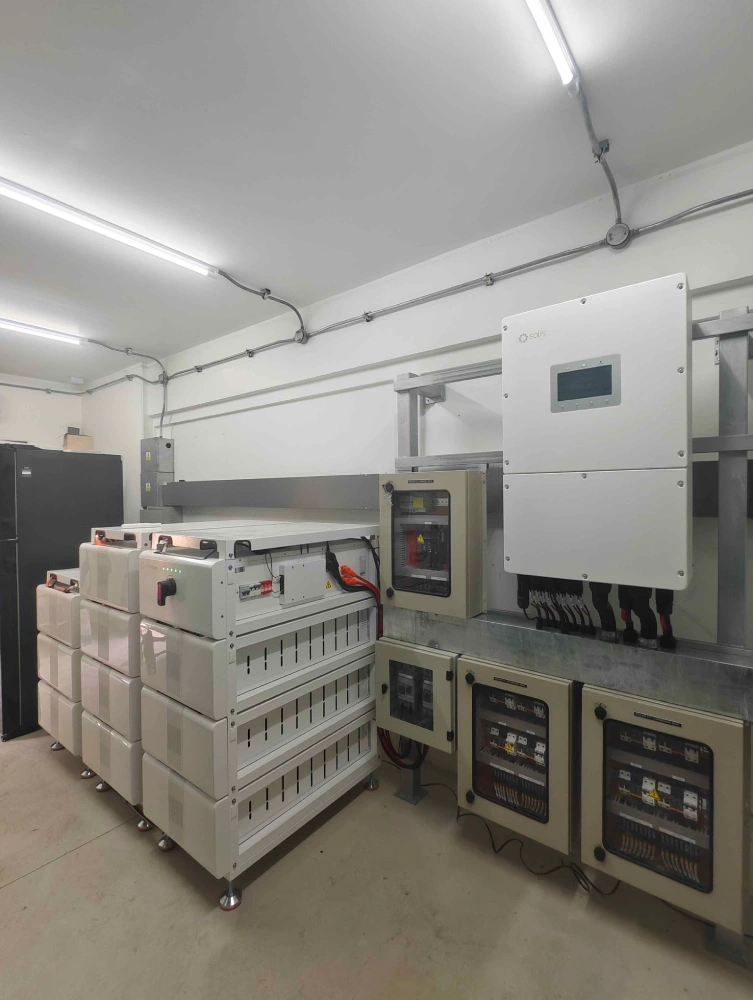
Kunini designed and installed a fully integrated solar-plus-storage system centred on the Solis S6-EH3P50K-H 50kW three-phase hybrid inverter — a unit purpose-built to manage simultaneous PV generation, battery charge/discharge, grid interaction, and off-grid backup from a single device. Its four independent MPPT inputs allowed the eight PV strings from three roof sections to be optimally managed, with the 540Wp and 715Wp strings each operating at their own maximum power point regardless of differences in irradiance or temperature between roof areas.
Battery storage is provided by the Solis FlexCore-ID system — a high-voltage stackable LiFePO4 battery platform. The installation comprises 11 battery packs (FlexCore-ID-BAT20kWh) configured in series at 704V DC, delivering 221 kWh of usable energy storage. LiFePO4 chemistry was selected for its exceptional cycle life (rated for more than 8,000 charge-discharge cycles to 70% capacity), inherent thermal stability, and suitability for both daily cycling and extended backup applications. The FlexCore-ID platform supports smart air-cooling thermal management, CAN/RS485/WiFi communication, and fire suppression at the pack level.
A key design decision was the construction of a purpose-built equipment room to house the inverter, battery packs, combiner panels, ATS, and associated protection equipment. Rather than distributing equipment around the property or installing into an existing utility space, the room was designed specifically around the system’s access, ventilation, and safety requirements. This ensures that the inverter and battery stack can be inspected, maintained, and serviced safely and efficiently throughout the system’s 25-year design life.
The system connects directly to the villa’s Main Distribution Board (MDB), with an Automatic Transfer Switch (ATS) managing the transition between grid and off-grid operation. In normal conditions, the solar array and battery supply all site loads, with the grid available as a backup source. During a grid outage, the ATS switches the site to island mode within milliseconds — the villa continues to operate normally without interruption. Zero-export control is implemented via CT metering and inverter firmware, ensuring generated power is consumed on-site and never exported to the PEA network.
DC protection across all eight strings is provided by individual DC MCBs and Type II DC surge protection devices at each string, with all DC cabling run in galvanised wireway and flexible metal conduit. AC-side protection includes a 3-phase RCBO at 100A, Type II AC SPD, and HRC fusing — all coordinated to PEA interconnection standards and installed to the specifications of the project’s licensed electrical engineer.
The Result
The completed system generates approximately 10,000 kWh per month — around 120,000 kWh annually — with 100% of that generation consumed on-site. At current residential tariff rates, this translates to estimated electricity cost savings of approximately THB 50,000 per month, or around THB 600,000 per year.
The 221 kWh battery bank provides meaningful energy autonomy. On a typical day, the battery is charged during peak solar generation hours and then discharged during the evening and overnight — significantly reducing or eliminating grid imports across a 24-hour cycle. In the event of a grid outage, the battery can sustain the villa’s essential loads for several hours depending on demand, with solar generation extending autonomy further during daylight hours.
On an annual basis, the system is expected to offset approximately 120,000 kWh of grid electricity — equivalent to avoiding around 65 tonnes of CO₂ emissions per year based on Thailand’s current grid emission factor.
Live system performance — including real-time generation, battery state of charge, grid import/export, and site consumption — is accessible via the Solis monitoring platform, giving the villa owner full visibility into the system’s operation from any device.
- Private Villa, Pattaya · ★★★★★ Google Review, July 2025
System Highlights
- 94.59 kWp DC across three metal sheet roof sections — eight strings, two panel types, four independent MPPT inputs
- 56 × LONGi LR5-72HPH 540Wp modules + 90 × Trina Solar TSM-NEG21C.20 715Wp modules — 146 panels total
- 1 × Solis S6-EH3P50K-H 50kW 3-phase hybrid inverter — solar, battery, grid, and off-grid managed from a single unit
- Solis FlexCore-ID 221 kWh LiFePO4 battery storage — 11 packs in series at 704V DC, rated for 8,000+ charge cycles
- Full energy security — ATS provides seamless transition to island mode during grid outages, <10ms switchover
- Connected directly to villa MDB — all site loads served by solar and battery as primary source
- Purpose-built equipment room — dedicated space for inverter, battery stack, and protection equipment; engineered for lifetime serviceability
- Zero-export control — 100% self-consumption, PEA compliant, CT metering with inverter firmware modulation
- Type II DC and AC surge protection on all strings — full protection coordination to PEA standards
- ~65 tonnes CO₂ avoided per year — meaningful environmental contribution from a single residential installation
Interested in Solar + Battery Storage for Your Property?
Whether your priority is energy security, cost reduction, or both — Kunini can design a system around your property’s actual load profile and energy goals. We offer no-cost site assessments and detailed savings proposals for residential and commercial customers.
Hua Hin: +66 (0) 61 413 4850
Pattaya / Si Racha: +66 (0) 82 056 7906
Email: info@kunini.com
Web: www.kunini.com