Self-Consumption Archives - Kunini

DC System Size

94.59 kWp

AC Inverter Output

50 kW

Solar Panels

146 modules (mixed)

Inverter

1 × Solis S6-EH3P50K-H

Panel Types

LONGi 540W + Trina Solar 715W

Battery Storage

Solis FlexCore-ID 221 kWh

Battery Chemistry

LiFePO4 (11 packs in series)

Battery Voltage

704 V DC

Roof Type

Metal sheet
(3 sections)

Equipment Room

Purpose-built, dedicated

Est. Monthly Generation

~10,000 kWh

Est. Monthly Saving

~THB 50,000

Location

Pattaya, Chon Buri

Completion

September 2026

Contract Type

EPC / Direct Purchase

Export Control

Zero Export
(CT + inverter control)

Project Overview

This project is a large-scale residential solar and battery storage system installed at a private villa in the Huai Yai area of Pattaya, Chon Buri. The property is served by a 22kV three-phase supply via a 160kVA oil-immersed transformer — characteristic of larger villa estates in the Bang Lamung district — and carries a correspondingly significant electricity load across the full site.

The villa owner approached Kunini with two clear priorities: energy security and long-term cost savings. With electricity costs rising and grid reliability a concern for a high-value residential property, the objective was to design a system capable of powering all site loads — independently of the grid when necessary — while significantly reducing the monthly electricity bill.

The result is a 94.59 kWp DC solar array paired with 221 kWh of Solis FlexCore-ID LiFePO4 battery storage, managed by a single Solis 50kW hybrid inverter. The system is connected directly to the site’s Main Distribution Board (MDB), meaning every load on the property is served by the solar and storage system as the primary source of power.

The Challenge

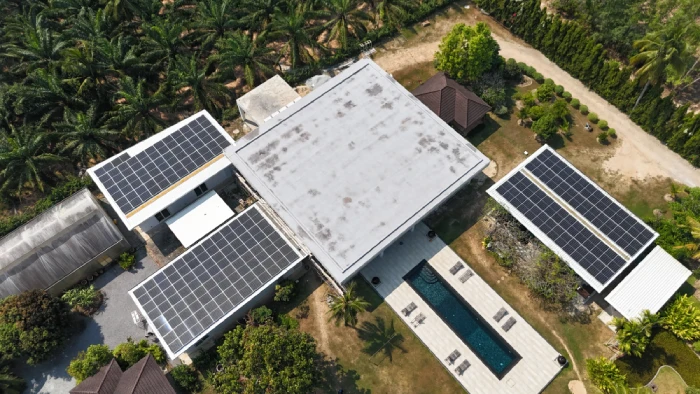
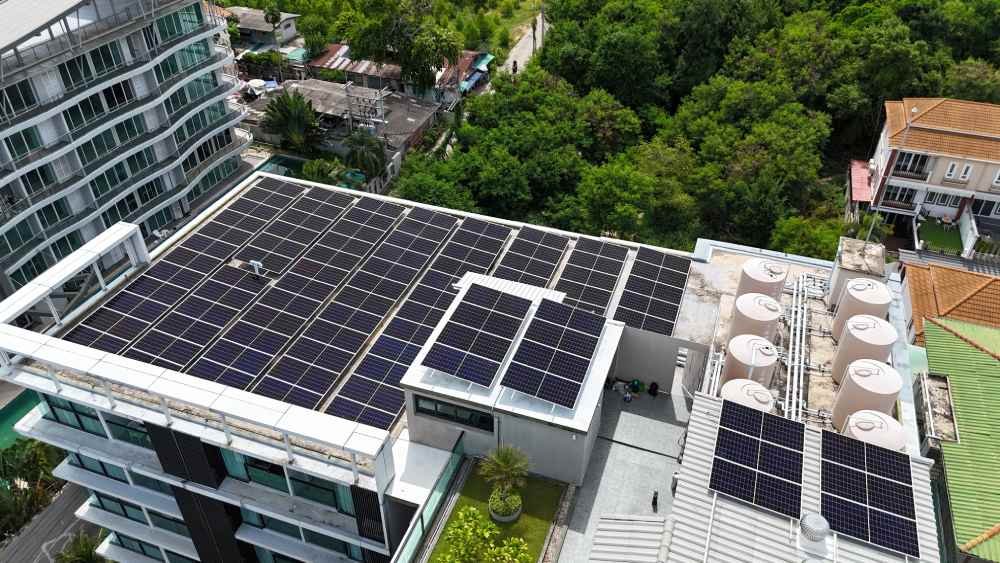
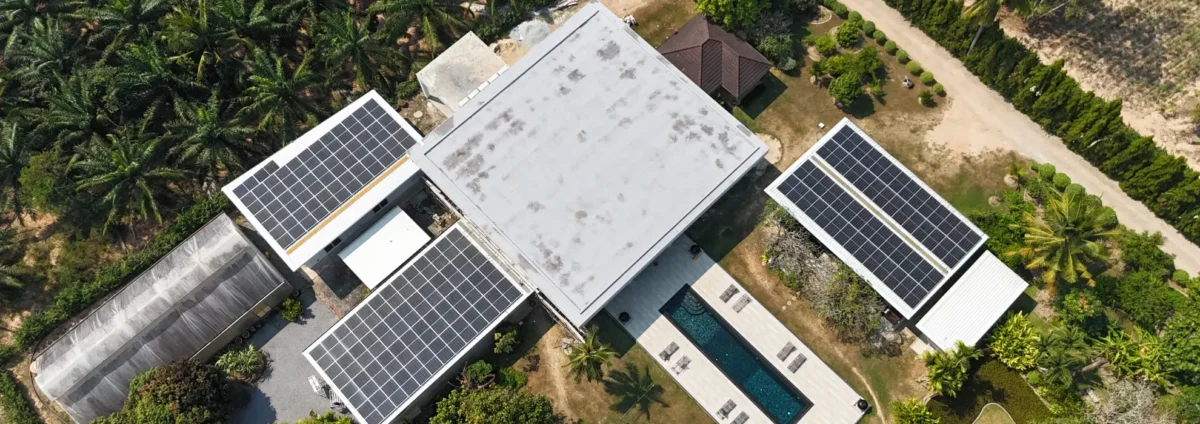
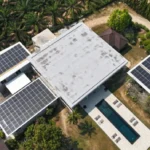
The villa’s solar resource is distributed across three separate metal sheet roof sections located at different points around the property — each with its own orientation, pitch, and available area. Designing a single coherent PV array from three physically separate rooftops required careful string engineering to ensure each section contributes optimally and that no one string drags down the performance of others.

The mix of available roof sections also dictated the use of two different panel models to make best use of available space: LONGi LR5-72HPH 540Wp modules on the smaller roof areas, and larger Trina Solar TSM-NEG21C.20 715Wp panels on the sections with greater capacity. Eight strings in total — three of the 540Wp modules and five of the 715Wp — feed into the inverter’s four independent MPPT inputs.

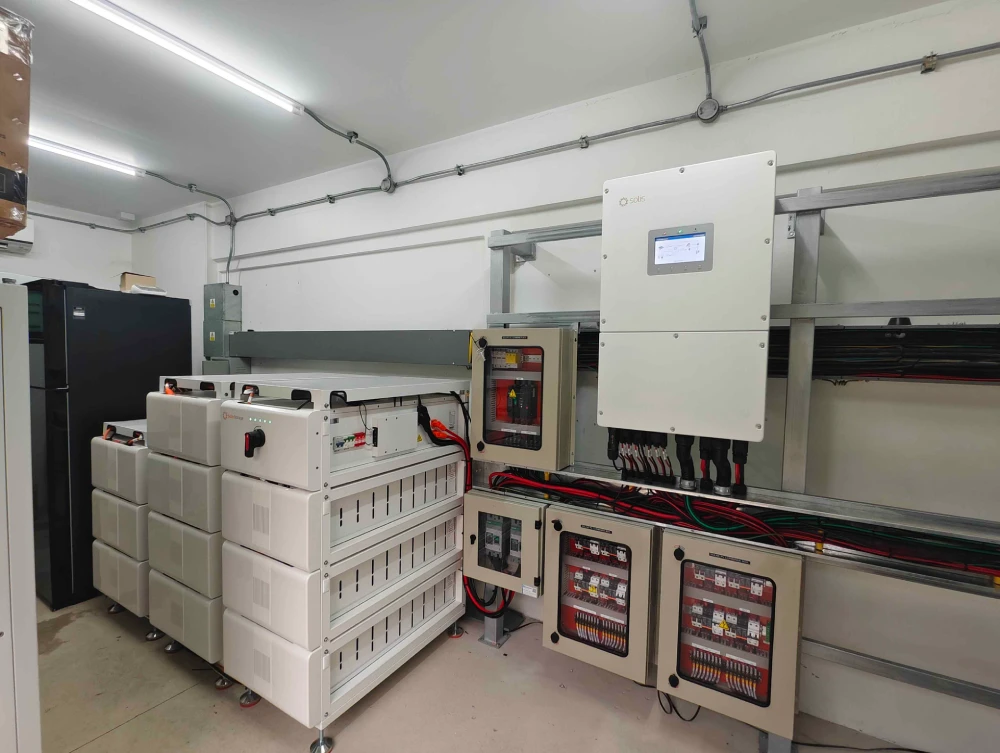
The integration of 221 kWh of high-voltage battery storage — 11 FlexCore-ID battery packs in series at 704V DC — presented its own installation requirements. A system of this scale needs dedicated space, adequate structural support, thermal management, and safe, accessible cabling routes. The villa owner also wanted a system that would be straightforward to service over its lifetime, not tucked into an ad-hoc installation.
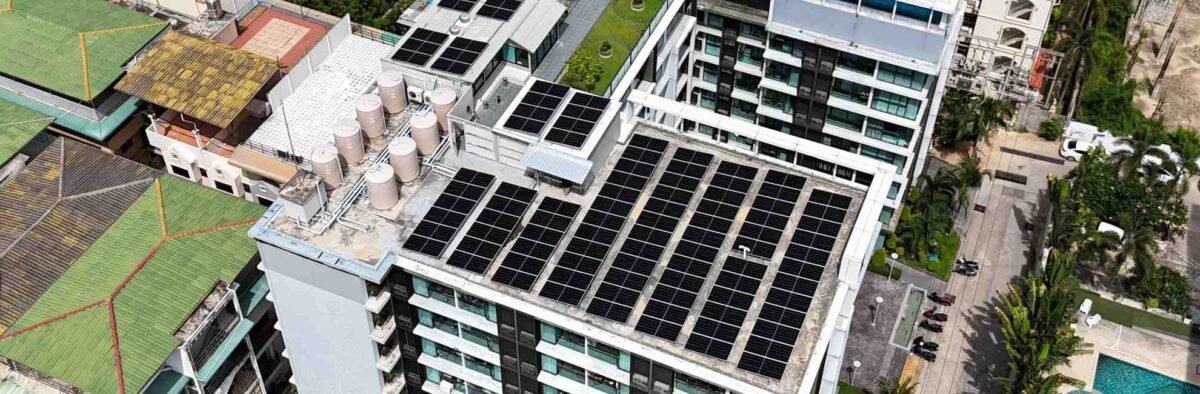
94kWp solar rooftop with battery storage — Private villa, Pattaya — Kunini Solar EPC

The Kunini Solution

Kunini designed and installed a fully integrated solar-plus-storage system centred on the Solis S6-EH3P50K-H 50kW three-phase hybrid inverter — a unit purpose-built to manage simultaneous PV generation, battery charge/discharge, grid interaction, and off-grid backup from a single device. Its four independent MPPT inputs allowed the eight PV strings from three roof sections to be optimally managed, with the 540Wp and 715Wp strings each operating at their own maximum power point regardless of differences in irradiance or temperature between roof areas.

Battery storage is provided by the Solis FlexCore-ID system — a high-voltage stackable LiFePO4 battery platform. The installation comprises 11 battery packs (FlexCore-ID-BAT20kWh) configured in series at 704V DC, delivering 221 kWh of usable energy storage. LiFePO4 chemistry was selected for its exceptional cycle life (rated for more than 8,000 charge-discharge cycles to 70% capacity), inherent thermal stability, and suitability for both daily cycling and extended backup applications. The FlexCore-ID platform supports smart air-cooling thermal management, CAN/RS485/WiFi communication, and fire suppression at the pack level.

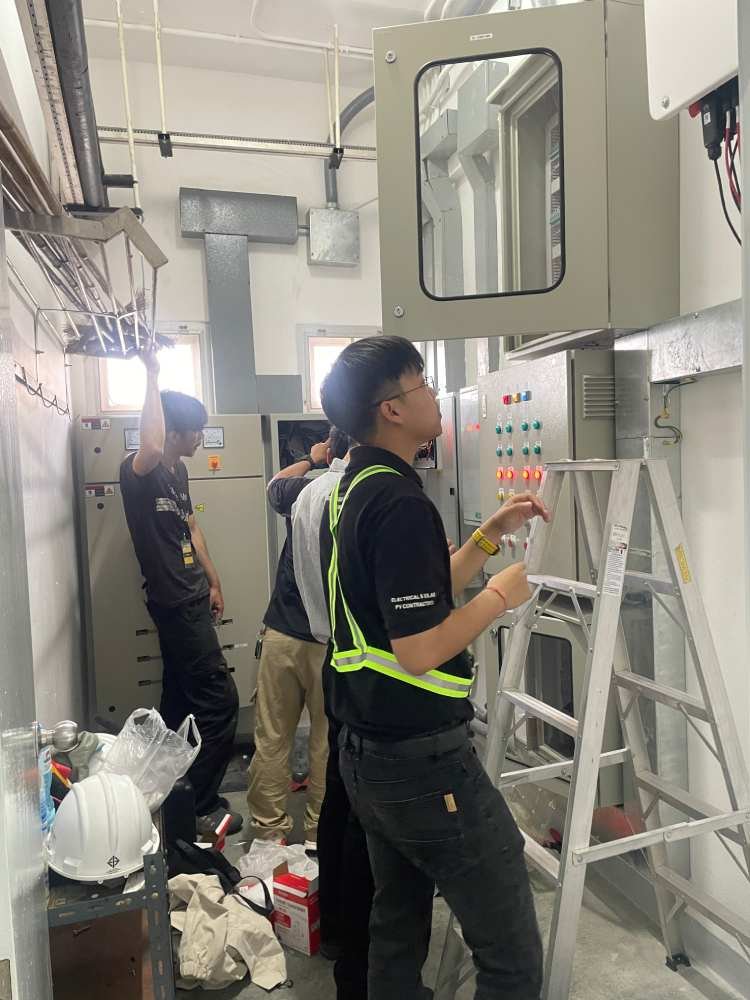
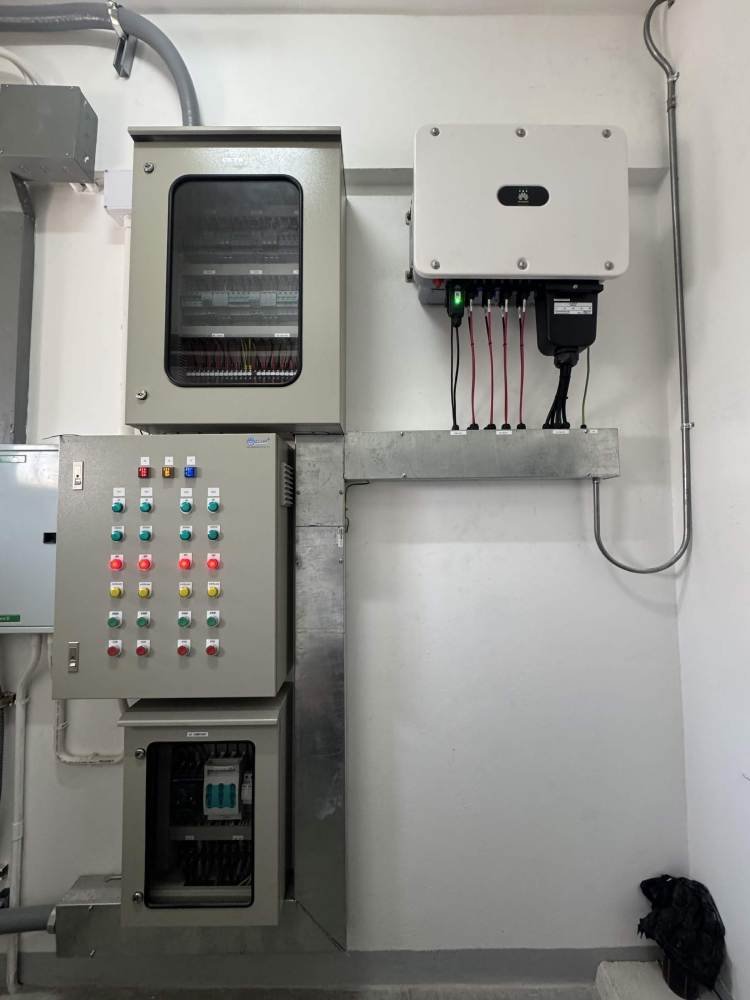
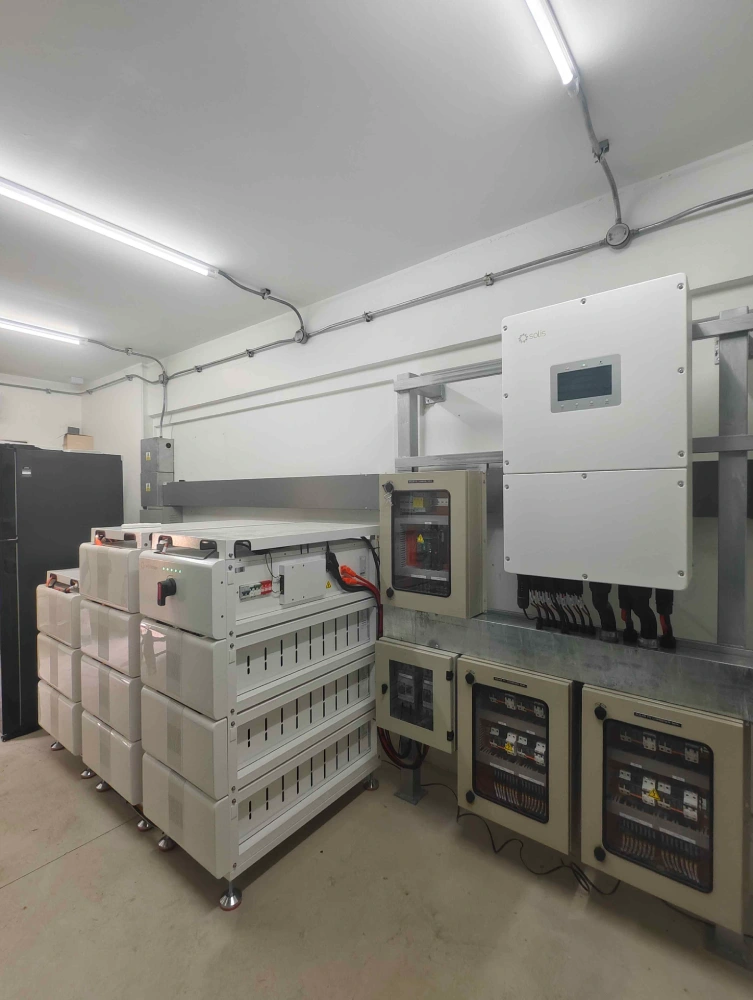
A key design decision was the construction of a purpose-built equipment room to house the inverter, battery packs, combiner panels, ATS, and associated protection equipment. Rather than distributing equipment around the property or installing into an existing utility space, the room was designed specifically around the system’s access, ventilation, and safety requirements. This ensures that the inverter and battery stack can be inspected, maintained, and serviced safely and efficiently throughout the system’s 25-year design life.

The system connects directly to the villa’s Main Distribution Board (MDB), with an Automatic Transfer Switch (ATS) managing the transition between grid and off-grid operation. In normal conditions, the solar array and battery supply all site loads, with the grid available as a backup source. During a grid outage, the ATS switches the site to island mode within milliseconds — the villa continues to operate normally without interruption. Zero-export control is implemented via CT metering and inverter firmware, ensuring generated power is consumed on-site and never exported to the PEA network.

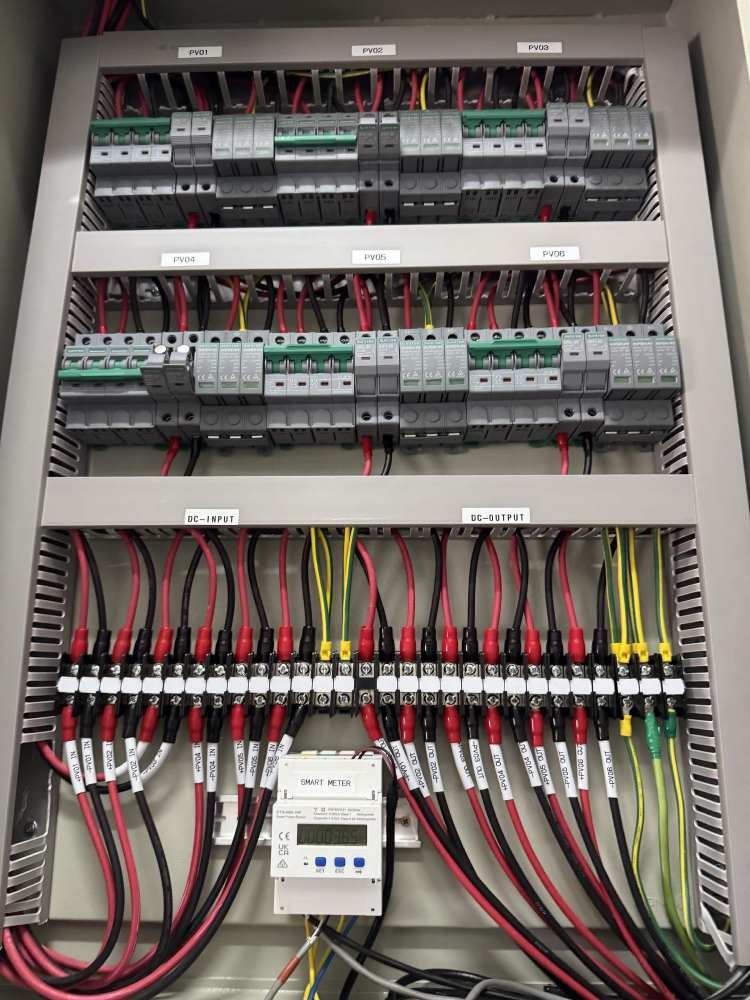
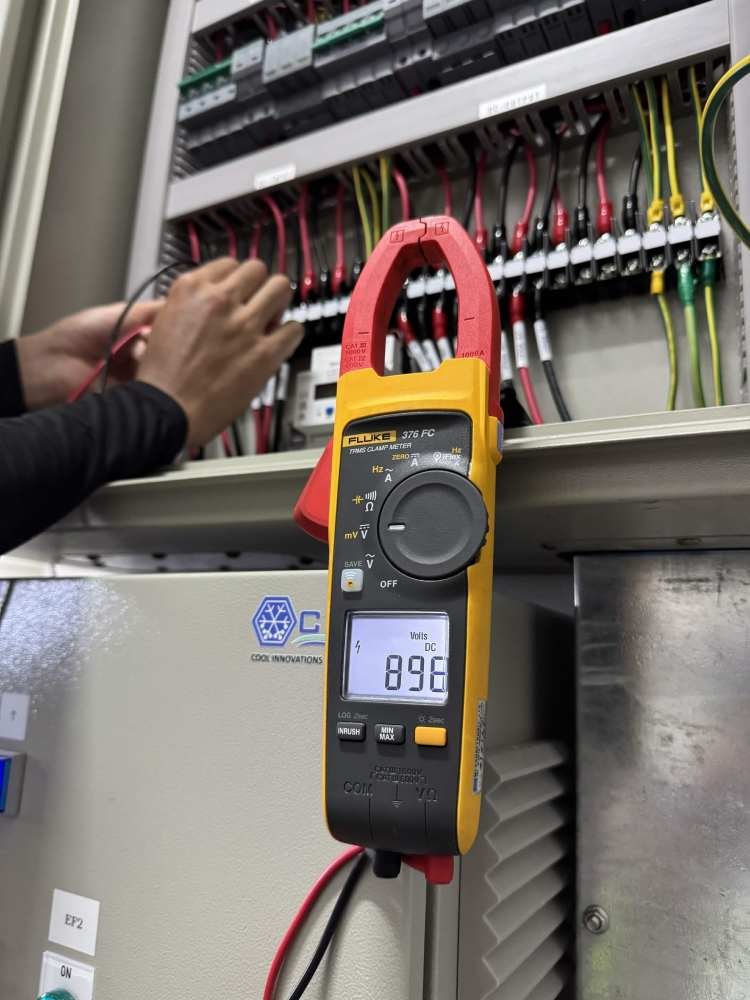
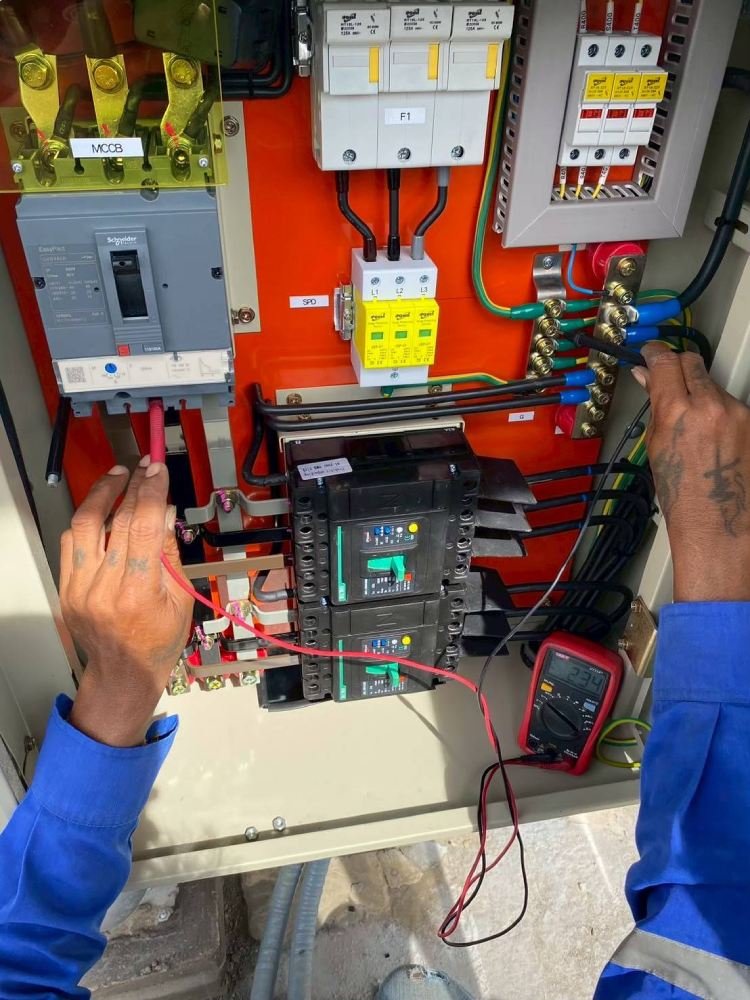
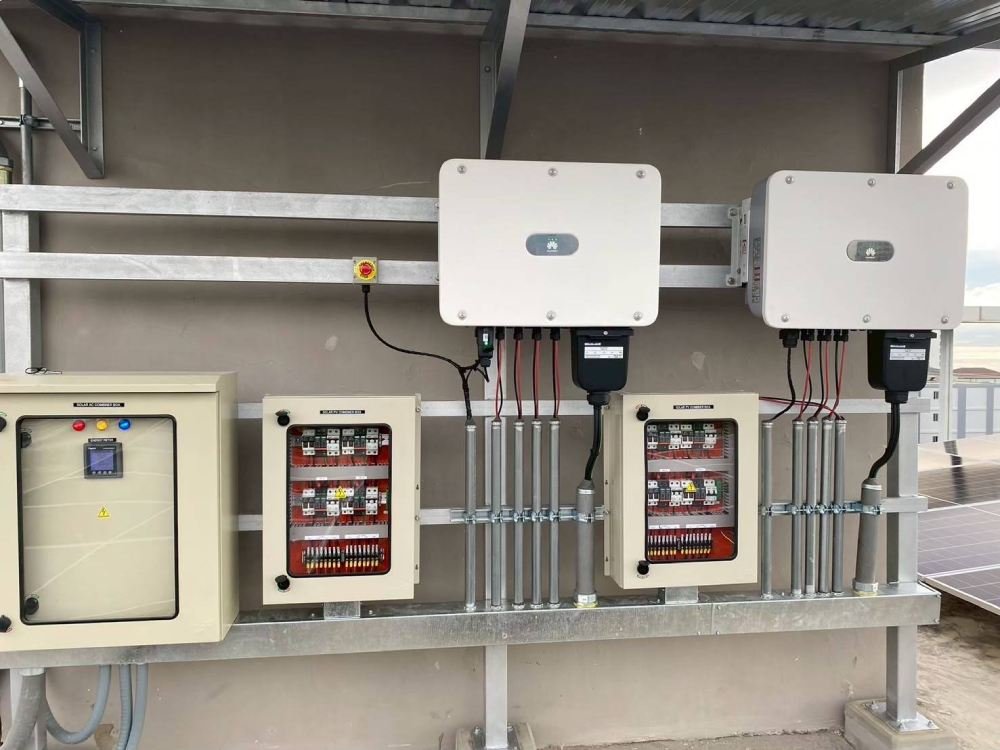
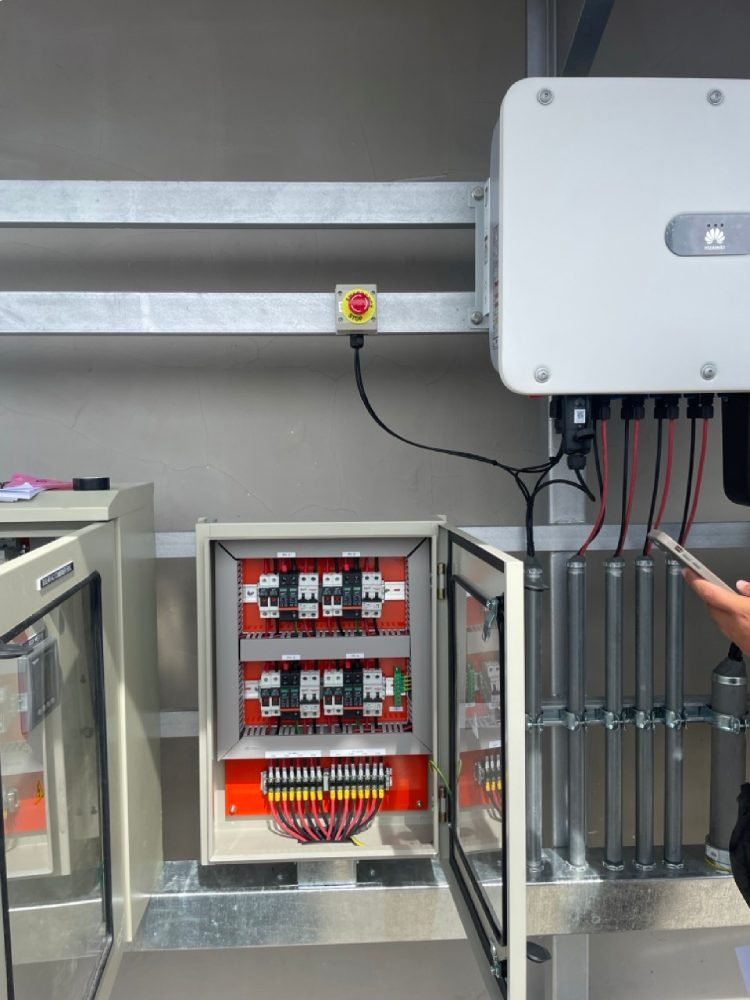
DC protection across all eight strings is provided by individual DC MCBs and Type II DC surge protection devices at each string, with all DC cabling run in galvanised wireway and flexible metal conduit. AC-side protection includes a 3-phase RCBO at 100A, Type II AC SPD, and HRC fusing — all coordinated to PEA interconnection standards and installed to the specifications of the project’s licensed electrical engineer.
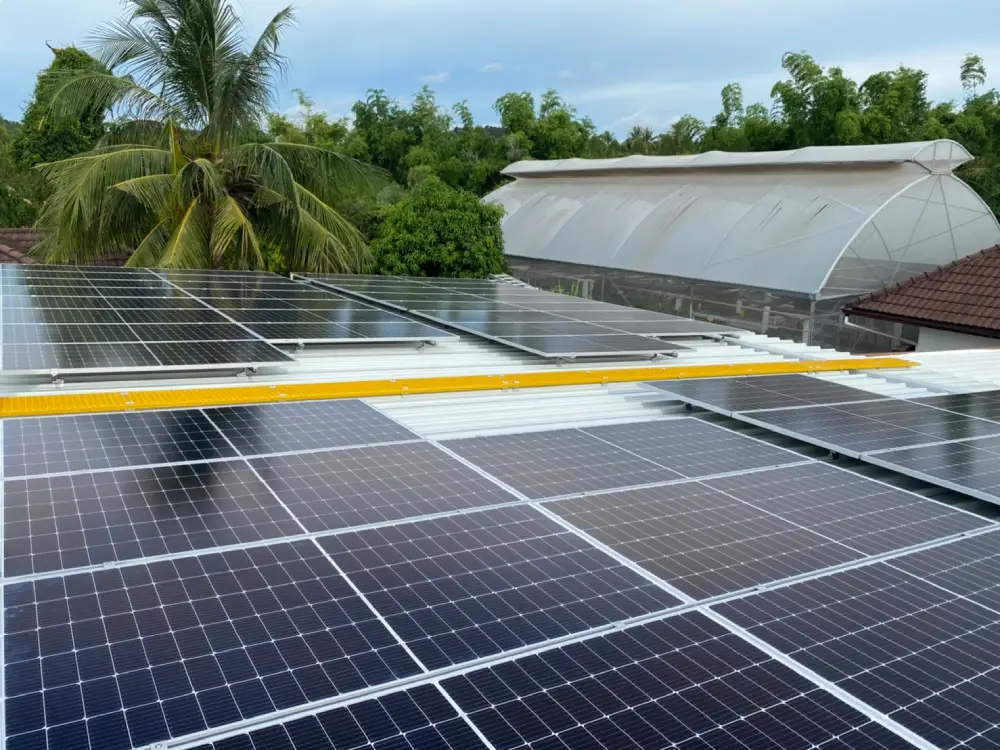
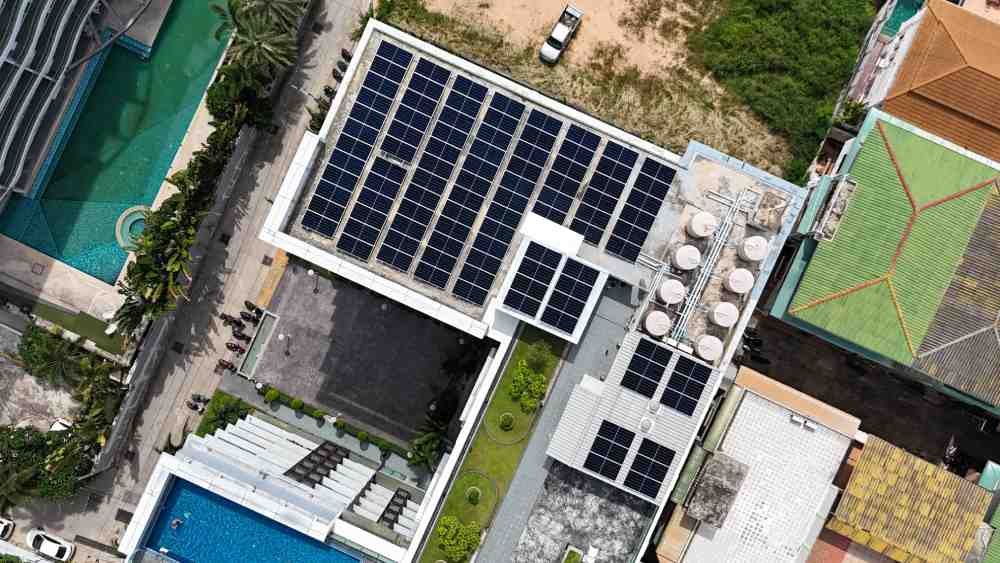
94kWp solar rooftop with battery storage — Private villa, Pattaya — Kunini Solar EPC

The Result

The completed system generates approximately 10,000 kWh per month — around 120,000 kWh annually — with 100% of that generation consumed on-site. At current residential tariff rates, this translates to estimated electricity cost savings of approximately THB 50,000 per month, or around THB 600,000 per year.

The 221 kWh battery bank provides meaningful energy autonomy. On a typical day, the battery is charged during peak solar generation hours and then discharged during the evening and overnight — significantly reducing or eliminating grid imports across a 24-hour cycle. In the event of a grid outage, the battery can sustain the villa’s essential loads for several hours depending on demand, with solar generation extending autonomy further during daylight hours.

On an annual basis, the system is expected to offset approximately 120,000 kWh of grid electricity — equivalent to avoiding around 65 tonnes of CO₂ emissions per year based on Thailand’s current grid emission factor.

Live system performance — including real-time generation, battery state of charge, grid import/export, and site consumption — is accessible via the Solis monitoring platform, giving the villa owner full visibility into the system’s operation from any device.
"It is a long established fact that a reader will be distracted by the readable content of a page when looking at its layout. The point of using Lorem Ipsum is that it has a more-or-less normal distribution of letters."
Private Villa

- Private Villa, Pattaya · ★★★★★ Google Review, July 2025

System Highlights

Interested in Solar + Battery Storage for Your Property?

Whether your priority is energy security, cost reduction, or both — Kunini can design a system around your property’s actual load profile and energy goals. We offer no-cost site assessments and detailed savings proposals for residential and commercial customers.

System Size

61.92 kWp DC

AC System Size

50 kW AC

Solar Panels

96 × LONGi 645W Bifacial

Inverter

1 × Huawei SUN2000 50kW

Mounting System

Antai Aluminum Racking

Roof Type

Metal sheet

(trapezoidal)

Monthly Generation

~8,300 kWh

Monthly Saving

~THB 40,000

Location

Rayong, Thailand

Completion

June 2026

Contract Type

EPC / Direct Purchase

Export Control

Zero Export

(inverter firmware)

Project Overview

AFR Plasmold Co., Ltd. is a plastic injection moulding manufacturer based in the Rayong industrial corridor — one of Thailand’s most active manufacturing hubs. Operating injection moulding machinery and production equipment throughout working hours, the factory draws a significant and predictable daytime electricity load, making it an excellent candidate for rooftop solar.

Kunini Solar was engaged to design and install a solar system sized to the available roof area and inverter capacity, with this installation treated as a pilot project — giving AFR a proof-of-concept before committing to further capacity as the business grows. The resulting 61.92kWp DC system was commissioned in June 2026 and operates as a zero-export site — every kilowatt-hour generated by the panels is consumed directly within the factory, reducing the amount of electricity purchased from the PEA grid at full industrial tariff rates.

The Challenge

The roof at AFR Plasmold is a trapezoidal metal sheet industrial roof — common across Rayong’s factory estates, but requiring a mounting system specifically engineered to avoid roof penetrations, maintain weatherproofing integrity, and accommodate the thermal expansion characteristics of the sheet material.

As an industrial consumer under a PEA time-of-use tariff, AFR’s primary objective was reducing daytime demand charges rather than generating feed-in revenue. The system therefore had to be sized and controlled to ensure that generated power never exceeded the factory’s instantaneous consumption — requiring zero-export functionality to be built into the inverter configuration.

Additionally, with 96 panels distributed across the roof, module-level safety and performance optimisation were priorities. Industrial rooftops present shading risks from vents, exhaust stacks, and roof-mounted equipment, and rapid shutdown capability was required to ensure safe access for maintenance personnel.

The Kunini Solution

Kunini designed a 61.92kWp DC / 50kW AC system using 96 LONGi LR5-72HTH 645W Bifacial solar panels — a high-efficiency monocrystalline bifacial module that captures light from both the front and rear surfaces, providing incremental yield from light reflected off the metal roof surface below.

A Huawei Smart PV Optimizer was installed on each of the 96 panels. These devices perform module-level maximum power point tracking (MPPT), ensuring that a single underperforming panel — whether due to dust, partial shading from roof equipment, or soiling — does not reduce the output of an entire string. Each optimizer also functions as a Rapid Shutdown Device (RSD), cutting DC voltage at panel level within seconds when the inverter is de-energised. This is a critical safety feature for maintenance staff and emergency responders, and a requirement under current PEA installation standards.

A single Huawei SUN2000 50kW three-phase string inverter manages the full array. Zero-export control is configured directly within the inverter firmware: the unit monitors real-time factory consumption and automatically modulates its output to match demand, ensuring that at no point does generated power exceed the building’s load and flow back into the PEA network. The system was installed and commissioned in full accordance with PEA regulations.

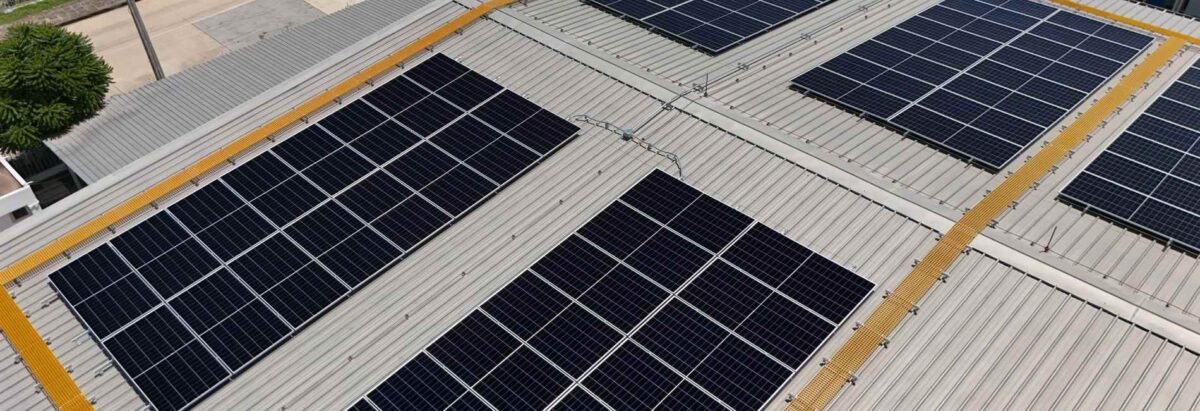
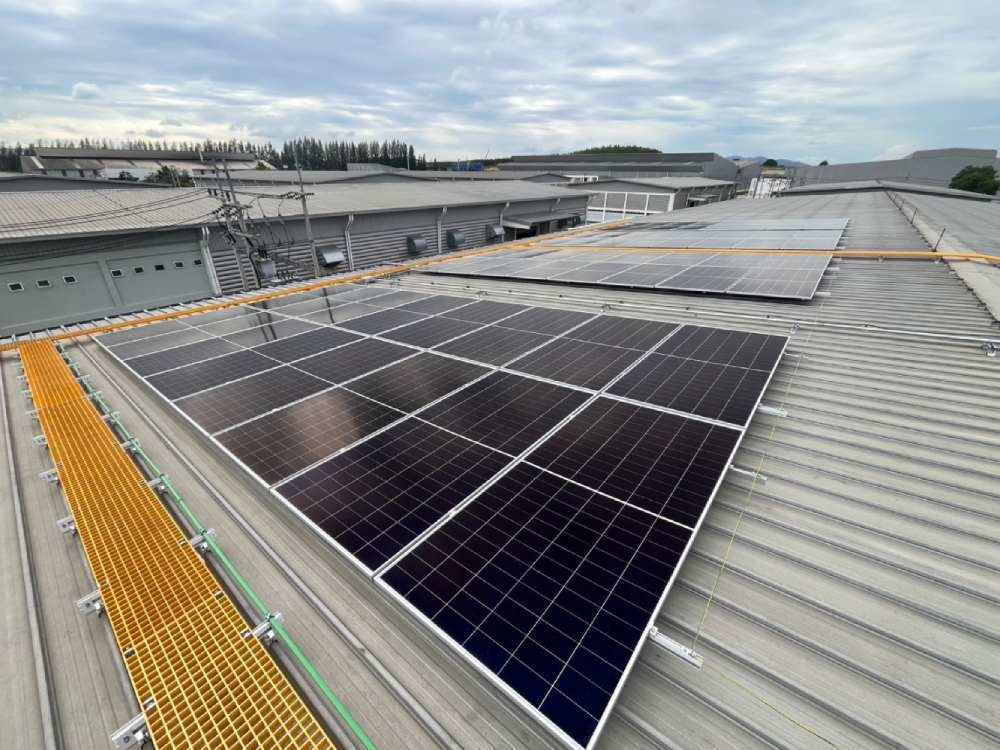
Antai Solar aluminum racking was used throughout — a system engineered specifically for trapezoidal metal sheet roof profiles, providing secure, weatherproof mounting without roof penetrations. A dedicated service walkway and permanent access ladder were installed alongside the panel array, ensuring the system can be safely inspected and cleaned throughout its operating life.

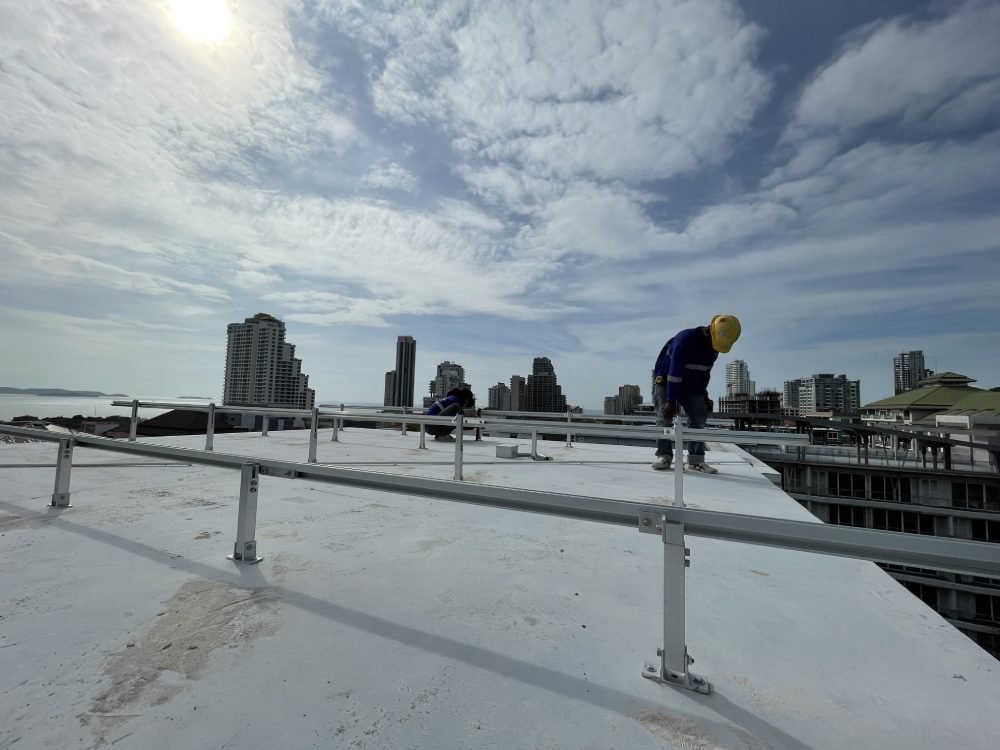
Rows of panels on the metal sheet roof — showing the Antai racking system

The Result

The AFR Plasmold system generates approximately 276 kWh per day and around 8,300 kWh per month — with 100% of that generation consumed on-site. At current PEA industrial tariff rates, this translates to a monthly electricity cost saving of approximately THB 35,000–45,000, depending on the applicable tariff block and time-of-use demand profile.

In the system’s first full month of operation (July 2026), the Huawei FusionSolar monitoring platform recorded electricity savings of THB 45,626 — validating the pre-installation savings projection and giving AFR management a clear, data-backed view of ongoing returns.

Solar now accounts for approximately 27% of the factory’s total electricity consumption, directly offsetting grid purchases during peak production hours — typically 08:00 to 17:00. On an annual basis, the system is expected to offset approximately 100,000 kWh of grid electricity, equivalent to avoiding around 55 tonnes of CO₂ emissions per year based on Thailand’s current grid emission factor.

The live monitoring dashboard — accessible via Huawei FusionSolar — gives the AFR management team real-time visibility into generation, consumption, and grid import data, with historical performance reports available on demand for ongoing cost management and reporting.

"Contrary to popular belief, Lorem Ipsum is not simply random text. It has roots in a piece of classical Latin literature from 45 BC, making it over 2000 years old."
Sample 3

- Sample 3, Testimonial

"There are many variations of passages of Lorem Ipsum available, but the majority have suffered alteration in some form, by injected humou."
Sample 2

- Sample 2, Testimonial

"It is a long established fact that a reader will be distracted by the readable content of a page when looking at its layout. The point of using Lorem Ipsum is that it has a more-or-less normal distribution of letters."
Sample 1

- Sample 1, Testimonial

System Highlights

Solar for Your Factory or Industrial Building?

If your factory’s monthly electricity bill exceeds THB 50,000 and you have suitable roof space, Kunini can carry out a no-cost site assessment and provide a detailed savings proposal. Whether you’re looking at a direct purchase EPC contract or exploring a Private PPA with zero upfront investment, we’ll design a system around your facility’s actual consumption profile and tariff structure.

System Size

66.96 kWp DC

AC System Size

66 kW AC

Solar Panels

108 × LONGi 620W Bifacial

Inverter

2 × Huawei

(36kW + 30kW)

Mounting System

Ballasted flat + metal clamps

Roof Type

Flat concrete & metal sheet

Monthly Generation

~8,600 kWh

Monthly Saving

~THB 50,000

Location

Pattaya, Chonburi

Completion

May 2025

Contract Type

EPC / Direct Purchase

Export Control

Zero Export

(CT at MDB)

Project Overview

Oriental Plaza Condo is a residential condominium located in Pattaya, Chonburi — a high-rise property with significant shared-area electricity consumption across common facilities, lifts, corridor lighting, car park ventilation, and pool equipment. With electricity costs representing one of the largest recurring operating expenses for the juristic person, the condo management engaged Kunini Solar EPC to design and install a rooftop solar system sized to the maximum capacity the available roof space would allow.

The resulting 66.96kWp DC system — commissioned in May 2025 — is configured exclusively for self-consumption, with zero export to the grid. Every kilowatt-hour generated by the panels is consumed directly within the building, reducing the amount of electricity drawn from PEA at full retail tariff rates and delivering an immediate, measurable monthly saving to the condominium.

The Challenge

The available roof area at Oriental Plaza Condo was split across two surface types — a flat concrete roof section and a pitched metal sheet roof — each requiring a different mounting approach. Maximising the usable area across both surfaces, while staying within structural load limits and PEA interconnection rules, required careful system layout planning.

As a residential building drawing power on a standard low-voltage tariff, there is no facility for grid export — meaning the system had to be precisely sized and controlled to avoid feeding surplus energy back into the PEA network. This required the installation of a zero-export control system using current transformers (CTs) at the main MDB panel, with real-time power limiting managed by the inverters.

Additionally, with 108 panels spread across a mixed roofline, individual panel shading and safety were priorities — particularly for the metal sheet sections where partial shading from roof features could reduce output and where module-level rapid shutdown (RSD) is essential for safe servicing.

The Kunini Solution

Kunini designed a 66.96kWp DC / 66kW AC system using 108 LONGi LR7-72HTH 620W Bifacial solar panels — a high-efficiency monocrystalline PERC bifacial module that captures light from both the front and rear surfaces, improving yield particularly on the flat concrete roof where reflected albedo is available from the light-coloured surface.

A Huawei Solar Optimizer was installed on each of the 108 panels. Optimizers perform module-level maximum power point tracking (MPPT), ensuring that shading or soiling on any individual panel does not drag down the output of the entire string. Each optimizer also acts as a Rapid Shutdown Device (RSD), cutting DC voltage at the panel level within seconds when the inverter is powered down — a critical safety feature for roof maintenance and emergency response, and a requirement under modern PEA installation standards.

Two Huawei grid-tied string inverters were selected — a 36kW unit and a 30kW unit — creating a combined AC output of 66kW. Splitting the system across two inverters improves overall system resilience: if one unit requires servicing, the other continues generating, and the load balancing allows each inverter to operate closer to its rated efficiency point.

Zero-export control was configured using CTs installed at the main MDB panel. The inverters monitor real-time load and automatically modulate output to match consumption — ensuring that at no point does generated power exceed the building’s demand and flow out to the PEA grid. The system was installed and commissioned in full accordance with PEA regulations.

The Result

The Oriental Plaza system generates approximately 280 kWh per day and around 8,600 kWh per month — with 100% of that generation consumed on-site. At current PEA residential tariff rates, this translates to a monthly electricity cost saving of approximately THB 50,000 for the condominium’s juristic person.

On an annual basis, the system is expected to offset approximately 103,000 kWh of grid electricity — equivalent to avoiding around 60 tonnes of CO₂ emissions per year, based on Thailand’s current grid emission factor. This is comparable to planting approximately 3,000 trees annually, and represents a meaningful contribution to the building’s environmental footprint reduction.

The live monitoring dashboard — accessible via Huawei FusionSolar — gives the building management real-time visibility into generation, consumption, and grid import data, and provides historical performance reports for transparency with residents and owners.

“I would like to thank Daniel and his team for their professional and efficient installation of our solar power system. From the first point of contact, Daniel was only too happy to provide all the necessary information to enable an understanding of solar power systems, constraints and benefits, along with any other questions about the installation. During the installation process, any challenges or problems were carefully considered, discussed and resolved in a professional manner, and to everyone’s satisfaction. Overall, the project was installed in an efficient and quality manner, resulting in the project being completed quicker than what was anticipated. I would recommend Kunini for your solar power system installation.”
David

- David, Oriental Plaza Condo, Pattaya · ★★★★★ Google Review, July 2025

System Highlights

Solar for Your Condominium or
Commercial Building?

If your building’s monthly electricity bill exceeds THB 30,000 and you have suitable roof space, Kunini can carry out a no-cost site assessment and provide a detailed savings proposal. Whether you’re looking at a direct purchase EPC contract or exploring a Private PPA with zero upfront investment, we’ll design a system around your building’s actual consumption profile.