Step 1
Free Eligibility CheckWe review your property, your existing or planned solar system, and your electricity connection to confirm eligibility and identify the correct utility authority and process for your location.
 Kunini

Earn 2.20 THB per kWh for Your Surplus Solar Energy — Kunini Manages the Full Application
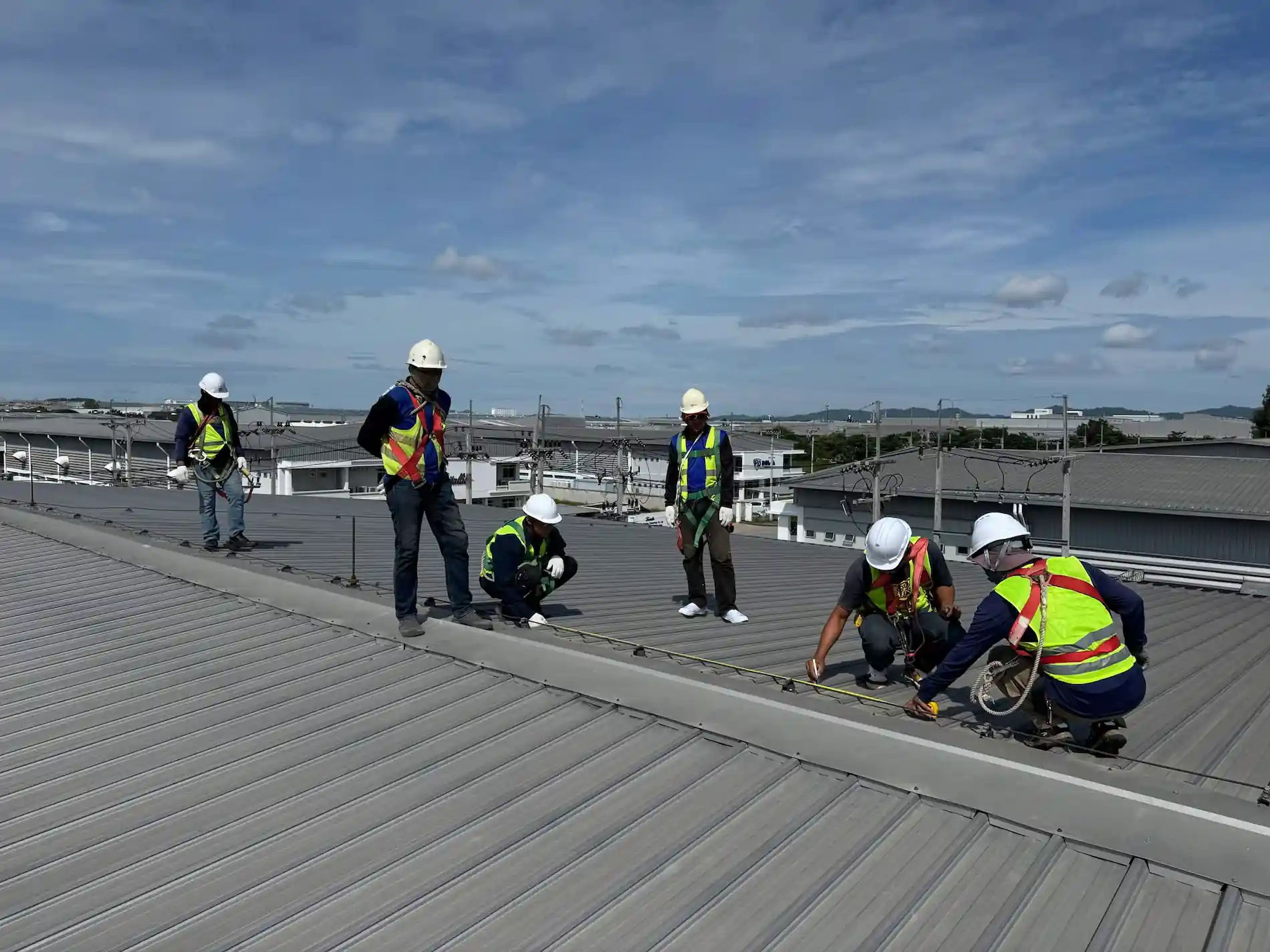
If your home has a rooftop solar system — or you’re planning to install one — Thailand’s Solar Feed-in Tariff programme lets you sell any surplus electricity your system generates back to the grid at a government-guaranteed rate of 2.20 THB per kWh, secured under a 10-year Power Purchase Agreement.
The programme is operated by the PEA and MEA and is open to residential homeowners across Thailand. Eligibility is processed on a first-come, first-served basis within national capacity limits, so timing matters.
Kunini manages the full application process on your behalf — from eligibility assessment through to smart meter installation and grid connection approval.
Thailand’s Feed-in Tariff operates on a Net Billing basis. Here’s what that means in practice:
Your solar system powers your home first. Every unit of solar electricity you self-consume directly offsets what you would otherwise purchase from the grid at the standard retail rate of approximately 4.50 to 5.50 THB per kWh. That self-consumption saving is the largest financial benefit of any solar system.
When your system generates more electricity than your home is consuming at that moment — during quiet daytime hours, for example — the surplus is exported to the grid. Under the Feed-in Tariff programme, that exported electricity is credited on your monthly electricity bill at a guaranteed rate of 2.20 THB per kWh, for the full 10-year term of your agreement.
The two benefits work together: lower bills from self-consumption, plus income from surplus export.

Feed-in Tariff Rate
Billing Mechanism
Self-Consumption Saving
Contract Duration
Maximum Export Capacity
Eligible Rate Category
System Placement
Quota Allocation
The buyback rate and programme terms are identical whether you are supplied by the MEA or the PEA. The difference lies in the application process, approved equipment lists, and which authority manages your grid connection.
| MEA | PEA | |
|---|---|---|
| Geographic Scope | Bangkok, Nonthaburi, Samut Prakan | 74 remaining provinces across Thailand |
| Application Portal | myenergy.mea.or.th | ppim.pea.co.th |
| Approved Inverters | MEA Approved Inverter List | PEA Approved Inverter List |
| Smart Meter | MEA installs digital bidirectional smart meter (fee billed during application) | PEA installs electronic net-billing meter or reprograms existing smart meter |
| Site Inspection | Local MEA district office | Local PEA provincial or district branch |
An important note on inverters: many leading brands — including Huawei, Growatt, and Deye — appear on both approved lists, but specific models must be verified for your utility. Kunini confirms equipment compliance as part of the application process.

To be eligible for the Feed-in Tariff programme, your property and system must meet all of the following criteria:
Kunini will confirm eligibility during a free initial consultation before any application is submitted.
Two recent changes have made participation more accessible for residential solar owners.
For residential solar systems up to 10 kVA, homeowners are now exempt from the need to obtain a separate ERC power generation licence. Submitting your grid connection application through the MEA or PEA portal automatically registers your system with the Energy Regulatory Commission. This removes a significant administrative step from the process.
Residential rooftop solar systems up to 10 kWp qualify for a personal income tax deduction of up to THB 200,000 on eligible installation expenditure. This deduction can materially improve the overall financial return on your solar investment and should be factored into any cost-benefit assessment.
Step 1
Free Eligibility CheckWe review your property, your existing or planned solar system, and your electricity connection to confirm eligibility and identify the correct utility authority and process for your location.
Step 2
Equipment Compliance CheckWe verify that your inverter and system components appear on the approved list for your utility (MEA or PEA), and advise on alternatives if required.
Step 3
Application Preparation and SubmissionKunini prepares and submits your complete application through the relevant utility portal, including all technical documentation, system specifications, and supporting materials.
Step 4
Utility Coordination and Site InspectionWe liaise directly with your MEA or PEA authority throughout the review process and coordinate the required site inspection and grid protection testing.
Step 5
Smart Meter InstallationOnce approved, your utility arranges installation of the appropriate smart meter. Kunini manages this coordination and ensures your system is correctly commissioned for net-billing.
Step 6
You Start EarningFrom your Commercial Operation Date (SCOD), your utility will credit your monthly bill for all surplus electricity exported to the grid at 2.20 THB per kWh — automatically, every month, for 10 years.
If you have an existing on-grid residential solar system and have not yet registered for the Feed-in Tariff programme, Kunini can assess your installation for compliance — including inverter approval status and export capacity — and manage the application on your behalf, regardless of who originally installed your system.

Places in the programme are allocated on a first-come, first-served basis within national and regional capacity limits. Once a quota round is full, applications are held until the next available round. If you are considering applying, the earlier you do so, the better your position in the queue.
Contact Kunini today. We’ll confirm whether your property qualifies, advise on current quota availability, and manage the entire application process from start to finish.